What Is the Difference Between a Fuse Box and a Circuit Breaker Panel?
Both fuse boxes and circuit breaker panels do the same job: they protect your home's wiring by cutting power when a circuit is overloaded or short-circuits. The difference is how they do it.
A fuse box uses single-use fuses. When a fuse blows, it destroys itself. You replace it with a new fuse. This sounds simple. The problem is that when a fuse keeps blowing, homeowners often replace it with one rated for more amperage than the circuit was designed for. A 15-amp circuit protected by a 30-amp fuse can carry twice its safe load without any shutdown. The wiring overheats silently inside your walls.
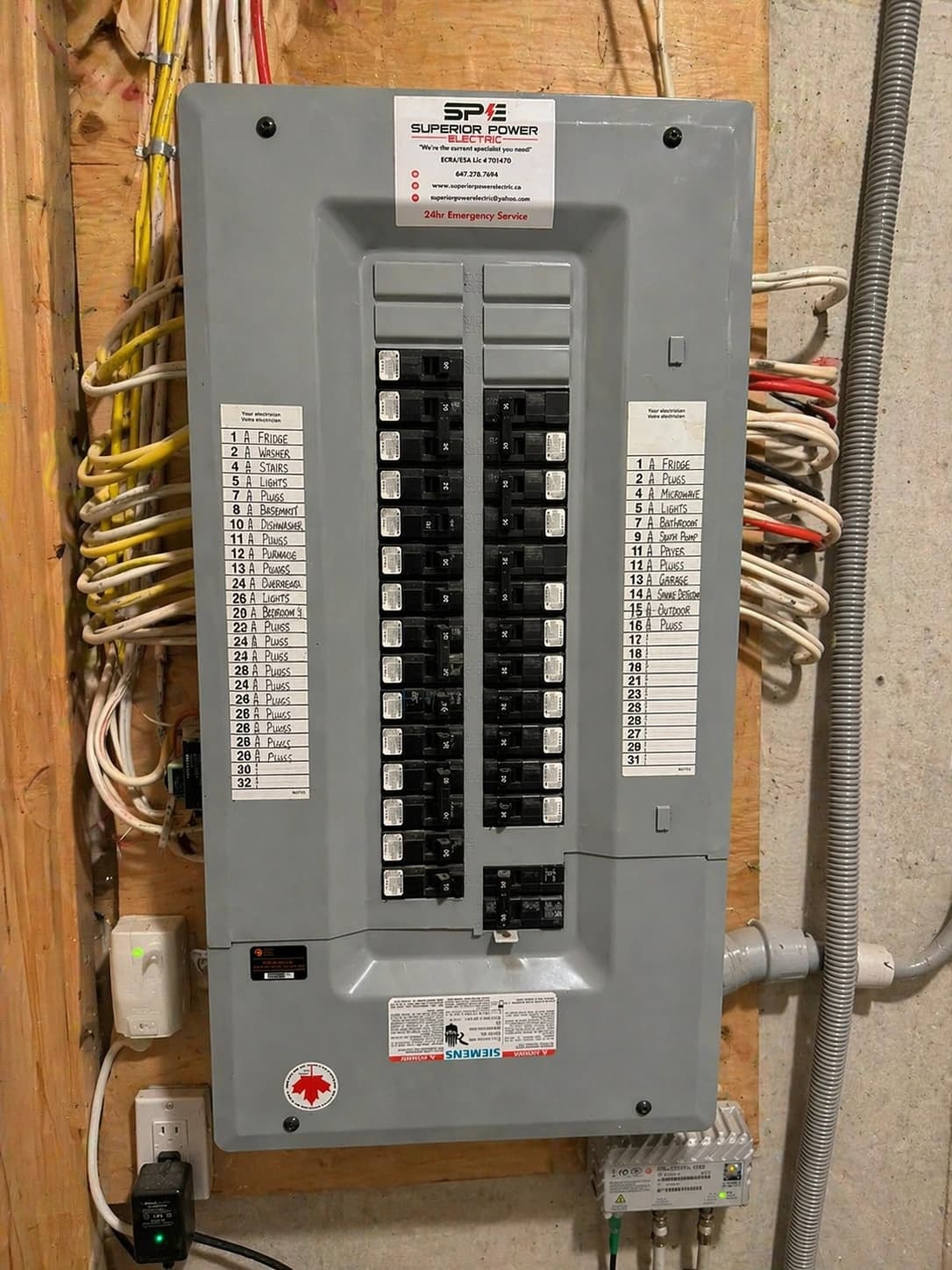
A circuit breaker panel uses resettable switches. When a breaker trips, you flip it off and back on. No replacement required. No opportunity to accidentally install the wrong protection level. Modern circuit breakers also support AFCI protection - arc-fault circuit interrupters that catch dangerous arcing before it starts a fire. Fuse boxes cannot support this technology.
Most Ontario homes built after 1960 have circuit breaker panels. If your home was built before that, it is worth checking what you have.
Why Fuse Boxes Are a Problem in Modern Ontario Homes
Fuse boxes were designed for a different era. When they were installed in Ontario homes, a typical household ran a stove, a few lights, and maybe a radio. The average home drew 3 to 5 kilowatts.
Today, that same home runs central air, a fridge, a dishwasher, a washer and dryer, multiple computers and televisions, and possibly an EV charger or hot tub. Modern homes routinely need 15 to 20 kilowatts or more.
Most fuse boxes in Ontario provide 60-amp service. A modern home needs at minimum 100 amps - and ideally 200 amps if you are adding an EV charger or planning any significant renovation. Running a modern home through 60-amp fuse box service is like trying to fill a bathtub through a garden hose.
Beyond capacity, the wiring in homes with original fuse boxes is often knob and tube or early aluminum wiring. Both present significant risks when carrying modern electrical loads. If your home has a fuse box, the wiring assessment is always part of the conversation.
The Insurance Issue: What Ontario Insurers Actually Do
This is what forces most fuse box conversations. Ontario insurance companies have been tightening their stance on fuse panels over the past decade, and the trend continues.
Here is what you may encounter. Some insurers refuse to write new policies for homes with fuse boxes entirely. Others will insure the home but charge surcharges - sometimes 20 to 50 percent above standard rates. Others grant coverage with a condition: replace the fuse box within 30 to 90 days or the policy is cancelled. Major Ontario insurers including Intact Insurance, Aviva Canada, Economical Insurance, and TD Insurance all treat fuse boxes as elevated-risk factors.
If you are buying a home with a fuse box, your mortgage lender may require proof of insurability before closing. When you go to sell, the buyer's insurer will flag the panel during underwriting.
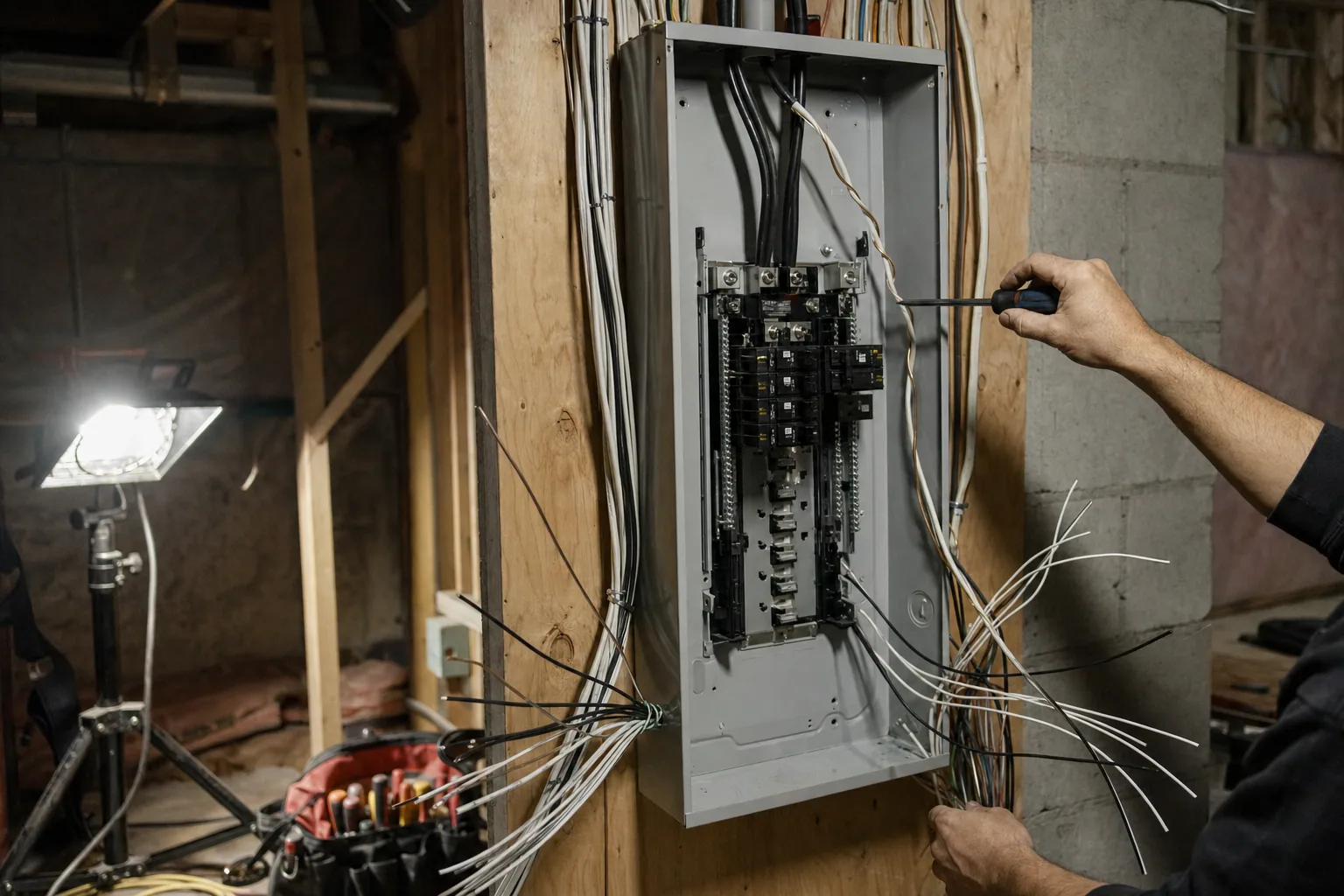
The fix is straightforward. Replacing a fuse box with a modern breaker panel is a one-day job for a licensed electrician. The ESA Certificate of Acceptance you receive after the work passes inspection is what your insurance company needs to update your policy and, in most cases, lower your premium.
Others will insure the home but charge surcharges - sometimes 20 to 50 percent above standard rates.
What Does a Fuse Box Upgrade Cost in Ontario?
Here is what Ontario homeowners are paying in 2026 for a fuse box upgrade.
A fuse box to circuit breaker panel conversion (60-amp or 100-amp swap) costs $1,500 to $2,000 in most Ontario markets. In Brampton, Mississauga, and the GTA, expect to pay $1,700 to $2,400 due to higher labour rates.
Most homeowners choose to upgrade to 200-amp service at the same time. The cost of a full fuse box to 200-amp circuit breaker upgrade in the GTA runs $2,800 to $4,500. The job is done once, and modern electrical demands mean 60 or 100 amps will not support the home long-term.
Here is what every proper quote should include: installation of a new modern breaker panel and circuit breakers, removal of the old fuse box, reconnection of all existing circuits, the ESA permit and inspection, and the ESA Certificate of Acceptance.
What can add to the cost: if your meter base needs replacing - common in older homes - that adds $600 to $1,400. If the service entrance cable is undersized for 200-amp service, that is also part of the scope. Your electrician will identify these during the assessment.
At Superior Power Electric, our quotes include the ESA permit. If someone quotes you without it, ask why.
The Over-Fusing Danger (and Why Circuit Breakers Prevent It)
This is the specific risk that concerns electricians most about fuse boxes, and most homeowners have never heard of it.
When a 15-amp fuse blows repeatedly, it is annoying. At some point, someone replaces the 15-amp fuse with a 30-amp to stop the nuisance. Problem solved - or so it seems.
That 15-amp circuit is rated for 15 amps. The wiring, connections, and devices on that circuit are all sized for 15 amps. By installing a 30-amp fuse, you have removed the circuit's protection. The circuit can now draw double its safe load without shutting down. The wiring overheats silently inside your walls for months or years before something gives way.
Circuit breakers physically cannot be swapped for a higher-rated version without replacing the entire breaker - which requires a licensed electrician, a permit, and a legitimate reason. They self-reset. They match the circuit they are protecting. There is no accidental over-protection.
If you have a fuse box, check your fuse ratings against your circuit labels. A 15-amp fuse on a 15-amp circuit is correct. A 30-amp fuse on a 15 or 20-amp circuit label is a fire risk.
Should You Upgrade? When the Answer Is Yes
Here is a clear checklist. If any of these apply, a fuse box upgrade is not optional - it is overdue.
Your insurance company sent you a letter. Some insurers are now proactively flagging fuse box homes at renewal. If you have received one, you have a deadline. Do not let it lapse.
You are planning any major addition. An EV charger, a hot tub, a heat pump, or a basement finishing project all require dedicated circuits that a fuse box cannot safely supply.
You are selling your home in the next two years. A home inspection will flag the fuse box. Buyers will ask for a credit or walk. Replacing it before listing costs less than the price reduction you will negotiate otherwise.
Your fuse box shows physical warning signs. Rust, scorch marks, a burning smell near the panel, fuses that blow frequently, or lights that flicker when appliances run.
Ready to get an honest assessment? Call Superior Power Electric at (647) 872-9954 to book a $49 panel assessment at your Brampton home. The $49 is credited toward your project if you proceed. We will inspect your panel, evaluate your electrical load, and tell you exactly what your home needs. ESA License #7014710. Serving Brampton, Mississauga, Vaughan, Caledon, Georgetown, and Oakville.
The $49 is credited toward your project if you proceed.
Common questions
Frequently asked
Is a fuse box illegal in Ontario?
Fuse boxes are not illegal in Ontario, but they create serious problems for home insurance. Many Ontario insurers charge surcharges for homes with fuse boxes or require replacement as a condition of coverage. The fuse box itself is not a code violation, but it often triggers related issues that affect insurability and home value.
How long does a fuse box upgrade take?
Most fuse box to circuit breaker upgrades are completed in a single day - typically 6 to 8 hours. Power will be off for 4 to 6 hours during the installation. More complex upgrades involving a meter base replacement may require a second day.
Can I get home insurance with a fuse box in Ontario?
Some Ontario insurers will cover homes with fuse boxes but charge higher premiums. Others require replacement within 30 to 90 days as a condition of coverage. Intact, Aviva, Economical, and TD Insurance all treat fuse boxes as elevated-risk factors. Call your insurer to confirm their current policy.
Does a fuse box upgrade require a permit in Ontario?
Yes. All panel work in Ontario, including fuse box to circuit breaker upgrades, requires an ESA permit and inspection. After the work passes inspection, you receive an ESA Certificate of Acceptance that your insurance company uses to update your policy.
What size panel should I upgrade to?
Most homeowners upgrading from a fuse box should go directly to 200-amp service. The cost difference between 100-amp and 200-amp during the same project is typically $300 to $600 - modest compared to the cost of doing the job twice. 200-amp gives you capacity for EV chargers, home additions, and modern appliance loads.
Shaun Pennant
Master Electrician, ESA/ECRA #7014710
Licensed master electrician with 15+ years serving Brampton and the Greater Toronto Area. Founded Superior Power Electric in 2020.