Do Ontario Homeowners Really Need a Generator?
Ontario has some of the most weather-vulnerable power infrastructure in Canada. Ice storms — the kind that knocked out power to 300,000 customers in December 2013 and again in January 2022 — are not once-in-a-generation events. The Brampton and Peel Region area averages several significant power disruptions per year, with outages lasting anywhere from a few hours to several days.
For most homeowners, a power outage is an inconvenience. For others, it is a serious problem. Families with well pumps (no power means no water), homeowners with electric heat as their primary heating system, people with medical equipment, and anyone who works from home all have real, concrete reasons to invest in backup power.
A properly installed generator — one that is permitted, inspected, and wired with the correct transfer switch — is a significant home upgrade that adds real value and real peace of mind.
Portable vs Standby Generators: Which One Is Right for You?
There are two fundamentally different approaches to backup power. Here is the honest breakdown.
Portable generators run on gasoline or propane and must be started manually and operated outside at least 20 feet from any door, window, or vent. They range from $500 to $4,000 for the unit, plus $500 to $1,200 for a licensed electrician to install a proper transfer switch and inlet box. Total installed cost: $1,000 to $5,000. They provide limited capacity — typically 5,000 to 12,000 watts — which is enough for a fridge, lights, a sump pump, and some outlets.
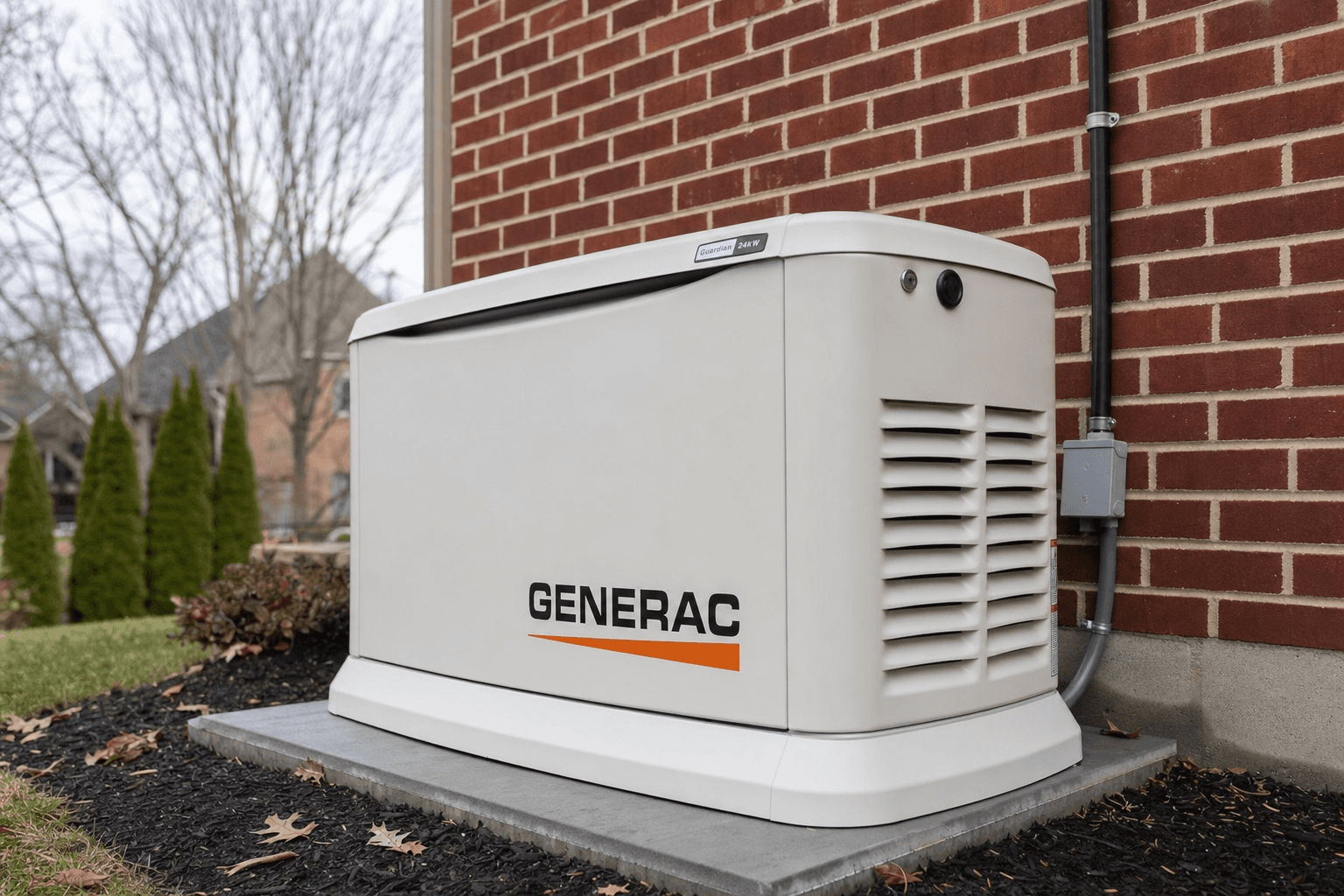
Standby generators are permanently installed beside your home on a concrete pad, connected to your natural gas or propane line, and wired to an automatic transfer switch (ATS). When the power goes out, they start automatically — within 10 to 30 seconds — and run the circuits you choose without any action from you. Unit cost ranges from $4,000 to $12,000. Installed cost including all electrical and gas work and the ESA permit: $10,000 to $20,000 for a whole-home system, or $7,000 to $13,000 for a critical-circuits system.
For most Ontario homeowners who want true peace of mind, a standby generator connected to natural gas is the right long-term investment.
Why a Transfer Switch Is Mandatory in Ontario
This is the part that surprises most homeowners. You cannot legally connect a generator directly to your home's wiring without a transfer switch.
Here is why. When your utility power is out, lineworkers are on the street working to restore it. If a generator is backfeeding into the grid through your meter, it can electrocute those workers — even if they are a kilometre away on the same circuit. This is called backfeed and it is why the Ontario Electrical Safety Code requires an approved transfer switch on every generator connection.
A manual transfer switch disconnects your home from the grid before connecting the generator. An automatic transfer switch (ATS) does this automatically — the moment it detects a power failure, it isolates your home from the utility and switches to generator power.
The "dryer outlet trick" — where some people plug a generator into their dryer outlet using a double-male cord — is illegal, extremely dangerous, and will void your home insurance. Do not do it.
All generator connections at Superior Power Electric include a proper ESA-permitted transfer switch. This is not optional.
What Does Generator Installation Actually Involve?
A full standby generator installation requires several coordinated steps.
First, site assessment. We assess your panel capacity, determine the best location for the generator (code requires it to be a certain distance from doors, windows, and gas meters), and measure the gas line run.
Second, concrete pad. A permanent generator must sit on a concrete pad. This is either poured new or an existing pad is used if it meets the size requirements.
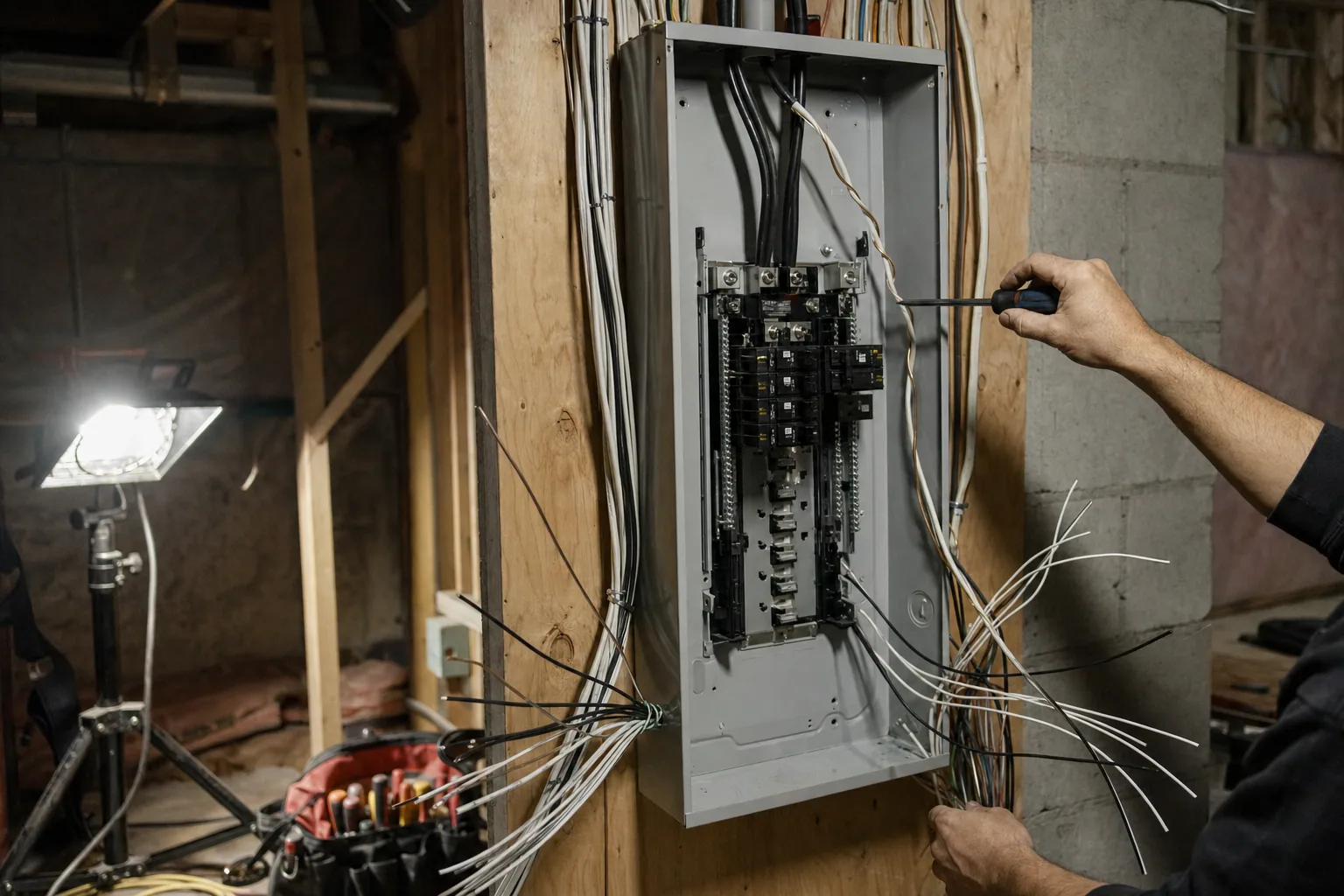
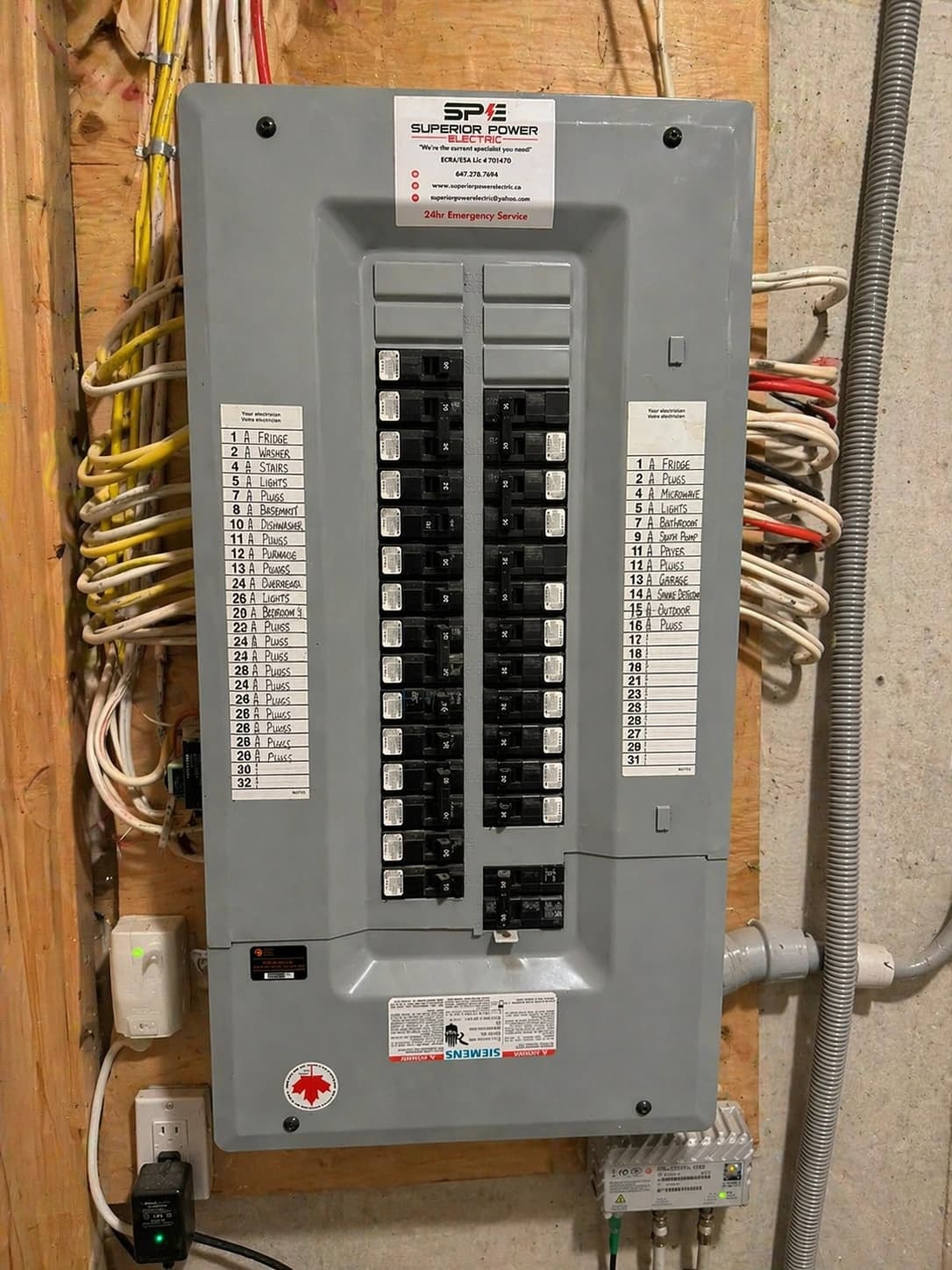
Third, electrical work. The automatic transfer switch is installed in or beside your electrical panel. The generator is wired to the transfer switch. An ESA permit is pulled and the installation is inspected.
Fourth, gas connection. A licensed gas fitter connects the generator to your natural gas supply. This is a separate trade from electrical — we coordinate this as part of the project.
Fifth, testing and handover. We test automatic startup, transfer, and shutdown. You see exactly how the system works before we leave.
For a portable generator installation, the scope is simpler: a transfer switch and inlet box are installed on your panel, and a weatherproof inlet receptacle is mounted on your exterior wall. This is the legal, safe way to connect a portable generator.
How Much Does Generator Installation Cost in Ontario?
Here are the realistic cost ranges for 2026 in the GTA.
Portable generator setup (transfer switch + inlet box, no generator included): $700 to $1,500 installed, including the ESA permit.
Standby generator — critical circuits system (protects your furnace, fridge, sump pump, some outlets, and lights — not the whole home): $7,000 to $13,000 fully installed including the unit, automatic transfer switch, concrete pad, gas connection, and ESA permit.
Standby generator — whole home system (enough capacity to run everything including HVAC, kitchen appliances, and EV charger): $15,000 to $25,000 fully installed.
These ranges reflect Brampton, Mississauga, and GTA pricing. Final cost depends on your panel's capacity, the distance from your gas line, and the size of the generator unit.
Note: If your electrical panel is a 100-amp panel or is already near capacity, a panel upgrade may be required before a standby generator can be connected. We identify this during the assessment.
Book a Generator Assessment in Brampton
Generator installation is one of those projects where the assessment matters as much as the installation itself. The right generator size, the right transfer switch type, and the right location for your specific home all need to be determined on-site.
Superior Power Electric offers a $49 on-site assessment for generator projects. We look at your panel, your gas service, your property layout, and your priorities — whole-home backup vs critical circuits — and give you a clear, flat-rate quote.
The $49 is credited toward the installation if you proceed. We handle the full electrical scope: transfer switch, panel connections, inlet box, permit, and inspection. We coordinate the gas fitter connection. You get one point of contact for the entire project.
Call us at (647) 872-9954 or book online. We serve Brampton, Mississauga, Caledon, Oakville, Vaughan, and Georgetown.
You get one point of contact for the entire project. Call us at (647) 872-9954 or book online.
Common questions
Frequently asked
Do I need a permit to install a generator in Ontario?
Yes. Generator installations in Ontario require an ESA electrical permit and inspection, and a gas permit for the natural gas connection. Both permits must be pulled by licensed trades — your electrician handles the electrical permit, and a licensed gas fitter handles the gas permit. Superior Power Electric coordinates both as part of the installation.
How much does it cost to install a standby generator in Ontario?
A critical-circuits standby generator system costs $7,000 to $13,000 fully installed in the GTA, including the unit, automatic transfer switch, concrete pad, gas connection, and ESA permit. A whole-home system costs $15,000 to $25,000. A $49 on-site assessment will determine the right size and configuration for your home.
Can I connect a portable generator to my house myself?
No. Connecting a generator to your home's electrical system without an ESA-permitted transfer switch is illegal in Ontario and creates a backfeed hazard that can kill utility workers. The double-male 'suicide cord' method is extremely dangerous. A proper transfer switch and inlet box installation costs $700 to $1,500 and is the only legal way to connect a portable generator.
What size generator do I need for my Ontario home?
For critical circuits (furnace, fridge, sump pump, lights, some outlets), a 10,000 to 14,000-watt generator is typically sufficient. For whole-home coverage including central air and an electric range, you need 20,000 watts or more. A licensed electrician calculates your home's actual load during the assessment to recommend the right size.
How long does generator installation take?
A portable generator transfer switch installation takes 4 to 6 hours. A full standby generator installation typically takes 2 to 3 days: one day for the electrical work and transfer switch, one day for the gas connection and concrete pad, and a final visit for testing and ESA inspection.
Shaun Pennant
Master Electrician, ESA/ECRA #7014710
Licensed master electrician with 15+ years serving Brampton and the Greater Toronto Area. Founded Superior Power Electric in 2020.