240V circuits, done to code, not to guesswork
Why won't my stove, dryer, or welder just plug into a regular outlet?
Because a regular household outlet is built for a lamp, not a machine that heats metal to 700 degrees or dries a load of towels in 40 minutes. Big appliances need their own dedicated 240-volt circuit, sized and wired specifically for that appliance, with its own breaker in the panel. Skip that step and you get tripped breakers at best, a melted outlet at worst.
The $49 comes off your project. Free remote estimates from photos.
 ESA/ECRA #7014710
The 20-second version
If you read nothing else on this page, read these.
- Stoves, dryers, welders, saunas, hot water tanks, and garage subfeeds all need their own dedicated 240V circuit, no exceptions.
- The plug shape tells you the wire count: 3-prong is old (grandfathered only), 4-prong (14-30, 14-50) is current code for anything new.
- Most single-circuit jobs in the GTA run $400 to $1,200, mainly driven by how far the run is and whether we're opening finished walls.
- An ESA permit is required for any new circuit, full stop. It's how the work gets inspected and how your insurance stays valid.
- Older 100-amp panels in Brampton and Mississauga are often already close to full. A load calculation tells us if there's room before anything else happens.
Every question, answered
Ask us anything. Here is all of it.
Money
How much does a new 240V circuit actually cost?
For a straightforward run, typically $400 to $1,200 installed. The low end is a short, easy run through an unfinished basement to a panel with spare capacity. The high end is a long run through finished walls, or a tight attic crawl. Panel work, if you need it, is priced separately.
What makes the price go up?
Distance from the panel is the big one. Every extra foot of wire and conduit adds material and labour. Finished drywall adds patch-and-paint work, or the cost of fishing wire through walls without cutting them open. And if your panel is full, that's a whole separate job before we even get to your outlet.
Is the $49 assessment worth it, or should I just get a quote?
The assessment gets you an electrician looking at your actual panel and actual run, not a guess over the phone. And it's credited toward the job if you book with us, so it's not really an extra cost, it's a $49 deposit on accuracy.
Do you offer financing?
Yes, through Financeit, for jobs where the cost adds up (say, a circuit plus a panel upgrade). Ask us during the estimate and we'll walk you through the options.
Can I get a remote estimate without a truck showing up?
Yes. Send us photos of your panel, the appliance's nameplate, and roughly where you want the outlet, and we'll give you a free estimate before we ever set foot on your property.
Which plug is which
Why is my dryer plug different from my stove plug?
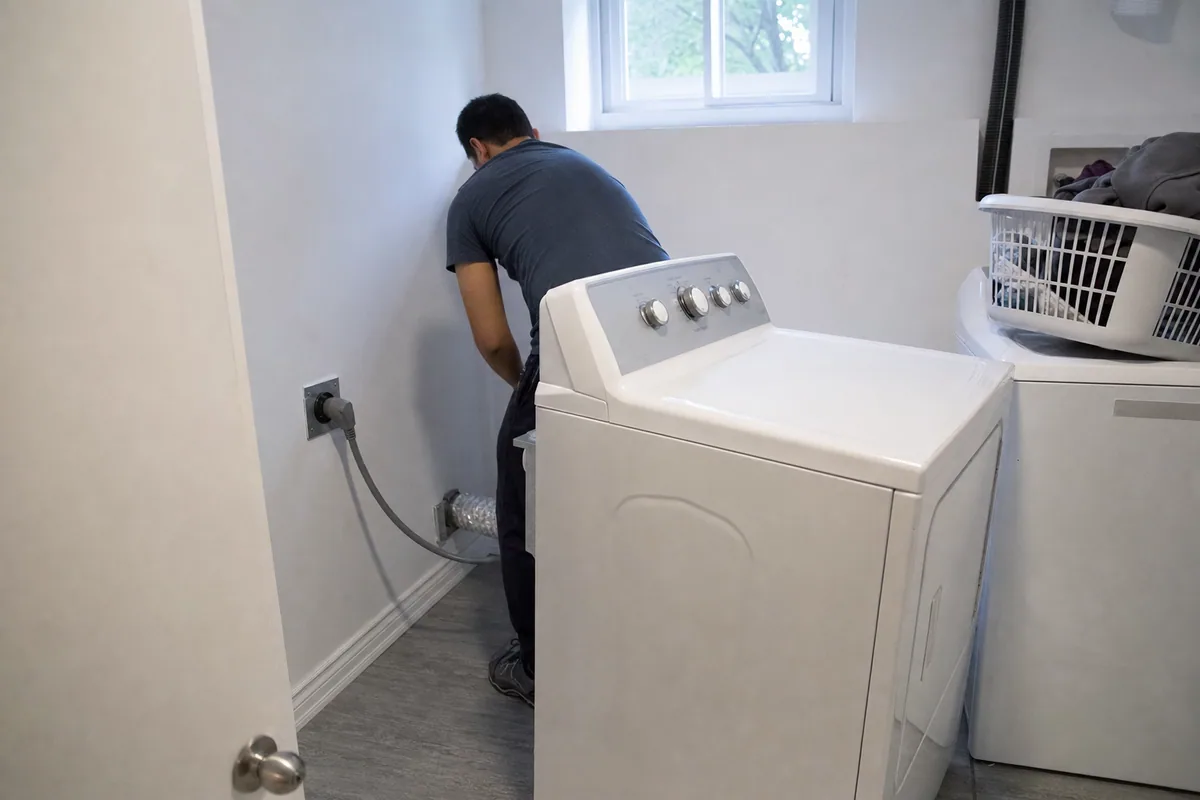
They're not actually that different, they're just sized for different loads. A modern dryer uses a NEMA 14-30 (4-prong, 30 amp). A range or stove uses a NEMA 14-50 (4-prong, 50 amp) because cooking pulls more power than spinning a drum. Same idea, different amperage for a different job.
My dryer outlet only has 3 prongs. Is that a problem?
It's legal if it was installed before the code changed and hasn't been touched since, that's what "grandfathered" means. But any new dryer circuit today must be a 4-wire, 4-prong setup (14-30). The 4th wire is a dedicated ground, separate from the neutral, and it's there so a fault in the appliance doesn't turn the frame into a shock hazard.
Can I just swap my 3-prong dryer plug for a 4-prong one myself?
No, and this is the one where people get hurt. Changing the plug without changing the wiring behind it doesn't add the missing ground wire, it just hides the problem behind a plug that looks right. If your dryer came with a 4-prong cord and your outlet is 3-prong, you need a proper 4-wire circuit, not an adapter.
What outlet does an EV charger or RV use, and is it the same as my stove?
A lot of Level 2 EV chargers and RVs use the same NEMA 14-50 as a range. That's handy, but it also means you can't run both off the same outlet at once, and you shouldn't assume a stove outlet is a free EV charging spot without checking the circuit's rating first. If you're specifically looking at EV charging, see EV charger installation.
What plug does a welder need?
Most home shop welders (180-250 amp range) use a NEMA 6-50, a 3-prong 240V plug rated for 50 amps. It looks similar to a range outlet but it's wired differently (no neutral), so don't assume they're interchangeable just because the amperage matches.
Can I run my welder off my dryer outlet if I'm not doing laundry that day?
No. And I get the logic, both are 240V, both look important. But the dryer circuit (14-30) is wired for 30 amps with a neutral wire your welder doesn't use and won't work with, and your welder likely wants 50 amps, which the dryer breaker isn't rated to give it. Best case it trips immediately. Worst case you overheat a wire that was never sized for the job. Get the welder its own 6-50, it's not expensive and it's the difference between a hobby and an insurance claim.
The panel question
Does my panel have room for one more circuit?
Maybe. Physical space (an open breaker slot) is only half the answer. The real question is electrical capacity, whether your panel can carry the extra load without exceeding its rated amperage. That's what a load calculation is for, and it's not optional, it's required under the Canadian Electrical Code (Section 8) before we add meaningful new load.
What's a load calculation, in plain terms?
It's adding up everything your panel already feeds, your existing appliances, HVAC, lighting, and comparing that against what the panel is rated for. If there's headroom, your new circuit fits. If there isn't, something has to change first, usually a panel upgrade.
I have a 100-amp panel. Is that going to be a problem?
Often, yes, especially in older Brampton and Mississauga homes where a 100-amp panel was standard decades ago and has since picked up an EV charger, central air, and a hot tub along the way. It's not automatic that you need an upgrade, but 100-amp panels are the ones most likely to be at or near capacity, so we check first rather than guess. See panel upgrades if that ends up being the answer.
What happens if you add a circuit to a panel that's already maxed out?
We don't. If the load calculation shows no room, we tell you before any wire gets pulled, not after. Adding load to an overloaded panel is how you get nuisance trips at best and an overheated panel at worst. It's a five-minute conversation that saves you a much worse one later.
If I need a panel upgrade too, does that get bundled with the circuit work?
Yes, and it should be, since the panel work has to happen first anyway. Bundling it means one permit process, one inspection, and one crew instead of scheduling two separate jobs weeks apart.
Safety & code
Do I actually need a permit for one new outlet?
Yes. Any new circuit in Ontario needs an ESA permit, regardless of how simple it looks. The permit is what gets the work inspected by a third party, which is what protects you if there's ever a fire, an insurance claim, or a home sale where the buyer's inspector asks questions.
What happens during an ESA inspection?
An ESA inspector checks that the circuit was installed to code, correct wire gauge, correct breaker size, correct grounding, before it's considered legal to use. We handle scheduling that inspection as part of the job, so it's not something you have to chase down yourself.
Does the breaker just need to match the outlet, or does it need to match the appliance?
The appliance, specifically its nameplate rating (that little metal tag on the back or side listing volts and amps). The breaker, wire gauge, and outlet all get sized to that number. A welder rated for 50 amps and a hot water tank rated for 30 amps don't get the same circuit even if they're both 240V.
Is a double-pole breaker just two regular breakers stuck together?
Basically, yes, in function. A 240V appliance needs two hot wires instead of one, and a double-pole breaker switches both of them together, so if one trips, both do. That matters for safety, you never want half a circuit still live.
What's actually dangerous about doing this wrong?
Undersized wire heats up under load and can start a fire inside your wall where you can't see it happening. A missing ground wire means a fault in the appliance can energize its metal frame instead of tripping the breaker. Neither of those show up as a problem until the day they really do.
Can I DIY?
Can I install a 240V outlet myself if I'm handy?
Legally, in Ontario, no, not for a permanent circuit like this. Electrical work needs to be done by a licensed electrician and inspected by ESA. Beyond the legal side, 240V mistakes don't announce themselves gently, and this isn't the place to learn on the job.
What about just replacing an outlet that's already there, same type, same spot?
Even a straight swap on an existing circuit is worth having a licensed electrician confirm, because it's your chance to catch a wire that's been quietly overheating or a connection that's loosened over time. It's a small job either way, so there's not much upside to doing it yourself and some real downside if something's off.
My neighbour did his own dryer outlet years ago. Was that ever legal?
Possibly, if it was done correctly and to the code that applied at the time, but that doesn't make it a safe bet to repeat today, and it doesn't mean it was inspected. A lot of older DIY work only becomes visible as a problem when a home inspector or an insurance adjuster finds it later.
Why can't I just buy the outlet and breaker and have an electrician wire it faster?
You're welcome to supply materials in some cases, but appliance circuits are one of the few places where getting the exact spec right (wire gauge for the run length, correct breaker curve, correct outlet rating) genuinely changes the safety outcome. We'd rather spec it ourselves and stand behind it.
Specific appliances
Does my sauna need its own circuit?
Yes, and most residential saunas are actually hardwired straight into a dedicated circuit rather than plugged in at all, no outlet, just a direct connection to the heater. That's normal and it's usually the better setup for a fixed appliance that's never getting unplugged and moved.
Does a hot water tank need a plug too?
Electric hot water tanks are typically hardwired as well, same logic as the sauna, it's a permanent fixture, not something you'd ever unplug, so there's no benefit to putting a plug on it. It still needs its own dedicated circuit sized to the tank's nameplate.
I'm setting up a garage workshop. What do I actually need?
Usually a subfeed, a small sub-panel fed from your main panel that gives the garage its own breakers for a welder outlet, a compressor, maybe a car charger down the line. It's cleaner than running five individual circuits back to the house panel, and it leaves room to add more later without opening walls again.
Can my garage subfeed handle a welder and an EV charger at the same time?
Depends entirely on what the subfeed itself is rated for and what the load calculation says your main panel can spare. This is exactly the kind of thing to plan up front rather than adding outlets one at a time and hoping. If EV charging is part of the plan, worth reading EV charger installation alongside this.
Is a hot tub circuit the same as an appliance circuit like this?
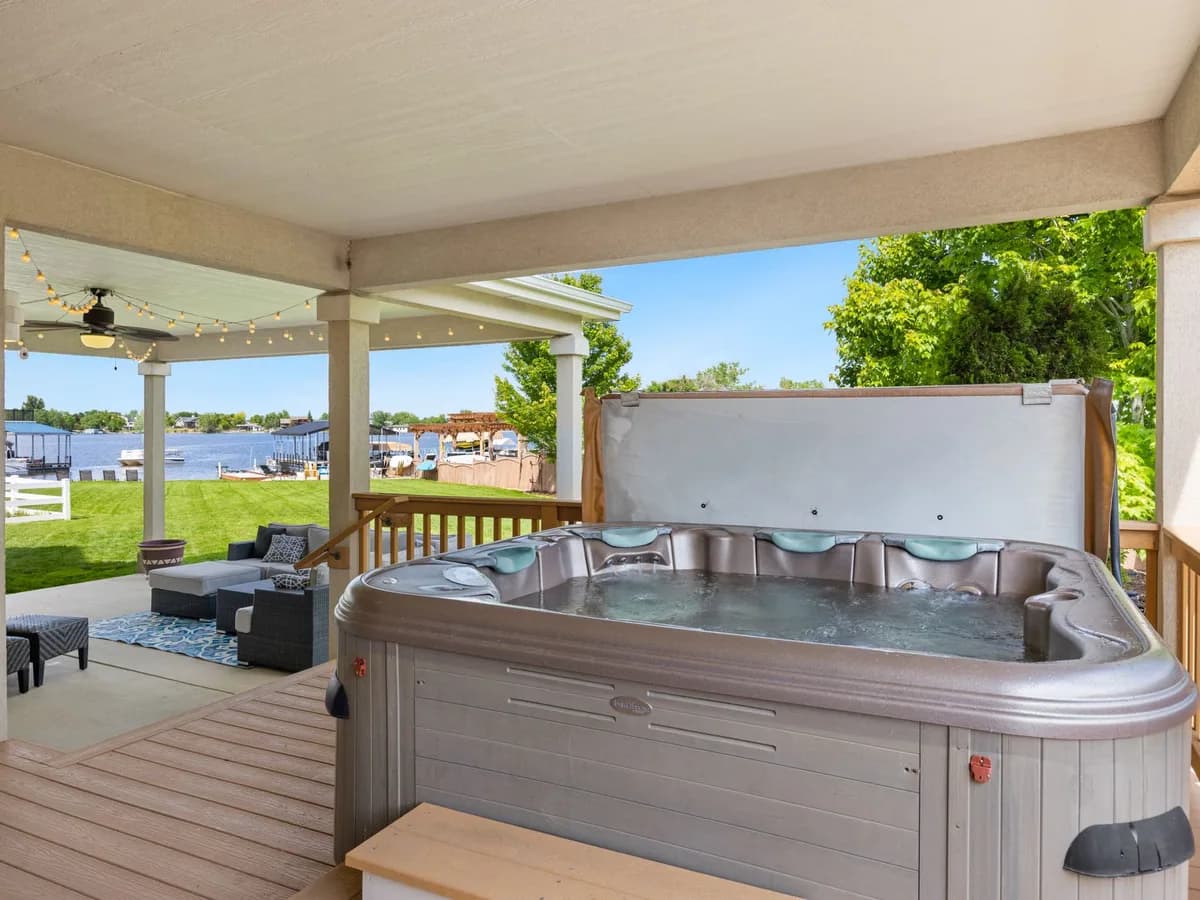
Same general idea, dedicated 240V circuit sized to the equipment, but hot tubs have their own code requirements around GFCI protection and disconnect placement near water. We treat those as their own category, see hot tub electrical for the specifics.
My new stove came with a different plug than my old one. Now what?
Check the nameplate rating and plug type against what's already in your wall. If it's the same NEMA type and amperage, you may just need the outlet swapped. If the new stove wants more power than the old circuit was ever rated for, that's a new circuit, not a swap. Either way it's a quick assessment to confirm before the stove shows up.
What this actually looks like
From the jobsite, not a catalogue
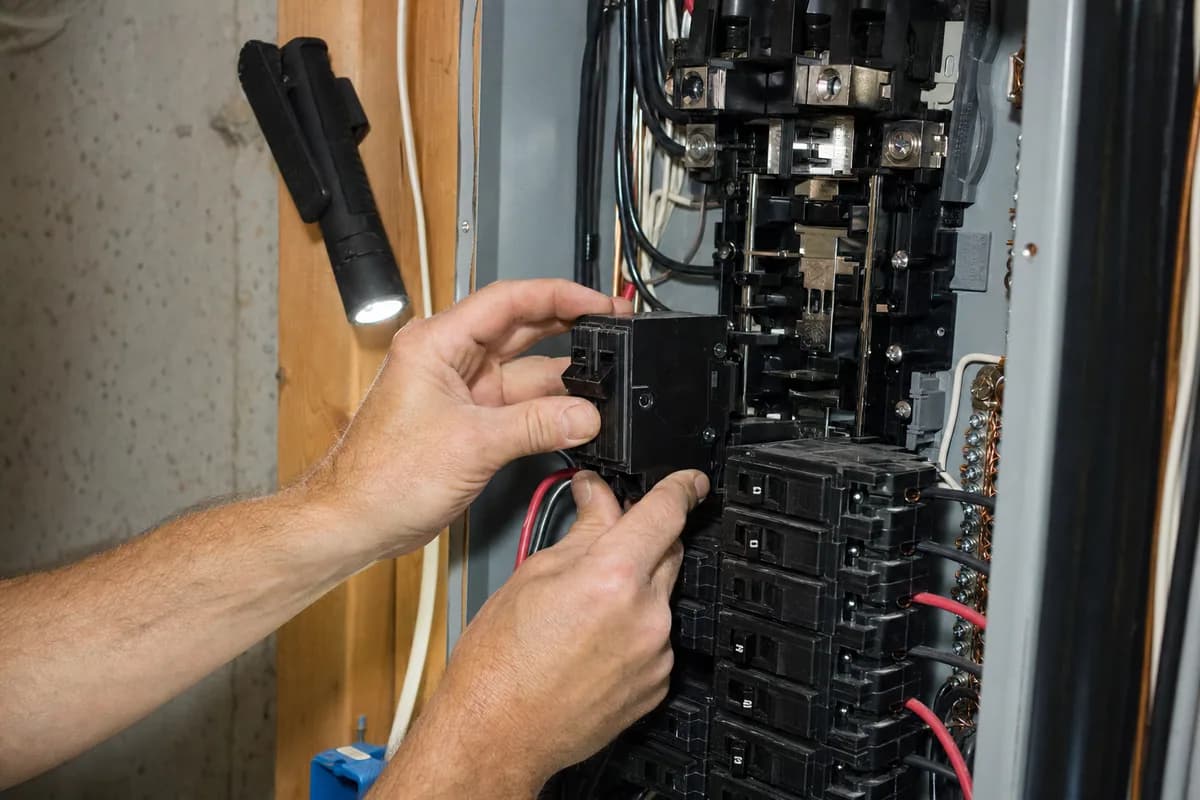
Money, straight up
What it actually costs
Rough numbers for the GTA. Your quote depends on run length, wall access, and panel capacity, but this is the range most jobs land in.
These are typical Ontario ranges based on jobs we've quoted, not a fixed price. Final cost depends on your specific panel, run length, and wall finish. The $49 assessment gets you an exact number.
| The job | Typical range | What moves the number |
|---|---|---|
| New dryer circuit (14-30) | $400 - $700 | Shorter runs, usually basement to laundry room, unfinished wall access |
| New range/stove circuit (14-50) | $450 - $800 | Similar run to a dryer circuit, slightly heavier wire for the higher amperage |
| Welder circuit (6-50) | $450 - $900 | Garage runs tend to be longer than kitchen or laundry runs |
| Hardwired sauna or hot water tank | $500 - $1,000 | No outlet hardware, but often a longer run to a mechanical room |
| Garage subfeed (sub-panel) | $1,200 - $3,000+ | Scales with amperage and how many circuits you want off it |
| Panel upgrade (if load calc requires it) | $2,000 - $4,500 | Priced and quoted separately, see panel upgrades |
No mystery process
What happens when you call
Here's the usual path from phone call to working outlet.
- 1
Assessment
We look at your panel, the appliance's nameplate, and the run, either remotely from photos or in person for $49 (credited to the job).
- 2
Load calculation & quote
We confirm your panel has room per CEC Section 8, then send a firm quote. If a panel upgrade is needed first, we tell you before any other work starts.
- 3
ESA permit
We pull the permit before work begins. This is what makes the circuit inspectable and legal, not a paperwork afterthought.
- 4
Installation
Dedicated wire run, correctly sized double-pole breaker, and the outlet (or hardwired connection) installed to match the appliance's exact rating.
- 5
ESA inspection & sign-off
We schedule the inspection and stand by the work. Once it passes, you've got a documented, insurable circuit, not a guess.
Things the internet got wrong
Myth vs. fact
“If the plug fits, the circuit is fine.”
A plug fitting into an outlet tells you nothing about whether the wire behind it, or the breaker feeding it, is rated for what you're about to run. Adapters and "universal" plugs are how mismatched circuits get overloaded.
“A welder and a dryer can share an outlet since they're both 240V.”
Voltage matching isn't the whole story. Amperage rating and wire configuration (a welder circuit has no neutral, a dryer circuit does) matter just as much, and mismatching them is exactly how breakers trip or wires overheat.
“My panel has an open slot, so there's room for a new circuit.”
An open breaker slot is physical space, not electrical capacity. A load calculation is what actually tells you if the panel can carry more without exceeding its rating.
“A 3-prong dryer outlet is illegal and needs to be replaced immediately.”
An existing 3-prong circuit installed to the code of its time is grandfathered and legal to keep using. It's new circuits that must be 4-wire. You don't need to panic, but don't add an adapter to force a 4-prong appliance onto it either.
“Small jobs like one outlet don't really need a permit.”
Size doesn't exempt a circuit from ESA permitting. Every new circuit needs one, and skipping it can come back to bite you at resale or with an insurance claim.
Walk away if...
- Offers to skip the ESA permit to save time or money
- Wants to add your new circuit without doing a load calculation first
- Suggests an adapter or plug swap instead of a proper 4-wire circuit
- Can't tell you the wire gauge or breaker size before starting the job
- No fixed quote, just an hourly rate with no estimate of total hours
A good electrician will...
- Asks for the appliance's nameplate rating before quoting anything
- Explains the load calculation result, not just "yes it'll work"
- Pulls the ESA permit as a standard part of the job, not an upsell
- Gives you a firm, itemized quote after seeing the panel and the run
- Tells you plainly if a panel upgrade is needed first, before starting other work
Around here specifically
A note for Brampton and Mississauga homes
A lot of the panels we see in older Brampton and Mississauga neighbourhoods are 100-amp, installed back when a house ran a fridge, a stove, and not much else. Since then those same panels have often picked up central air, a finished basement, maybe an EV charger. Add one more 240V appliance circuit and you might be right at the edge of what the panel can safely carry. That's why we always run a load calculation before quoting new circuit work, it tells us honestly whether your existing panel has room or whether a panel upgrade needs to happen first. Better to know that upfront than after the wire's already run.
Still have a question we missed?
Call and ask it. A licensed electrician answers, and honest advice is free even when the job isn't ours.