The short answer
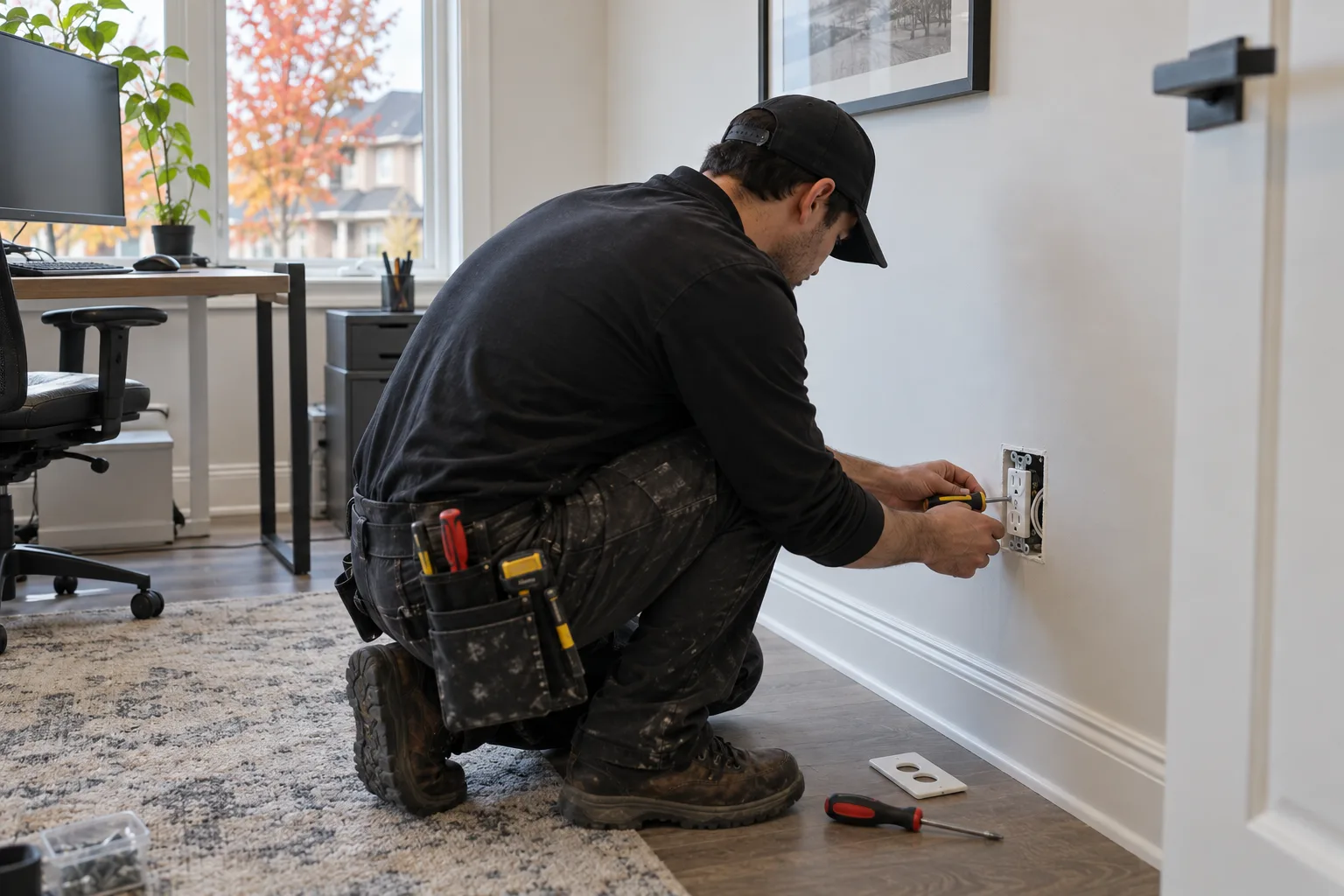
Adding a new outlet, or moving one to a new spot, is new wiring. In Ontario that needs a notification of work filed with the Electrical Safety Authority (ESA) before the work starts. There is no small-job exception. ESA's DIY page says even little jobs need a notification.
The work itself is usually quick. One or two outlets added from an existing circuit, with open access from a basement or attic, is a few hours. An outlet that needs its own new circuit from the panel, or cable fished through finished walls, takes longer.
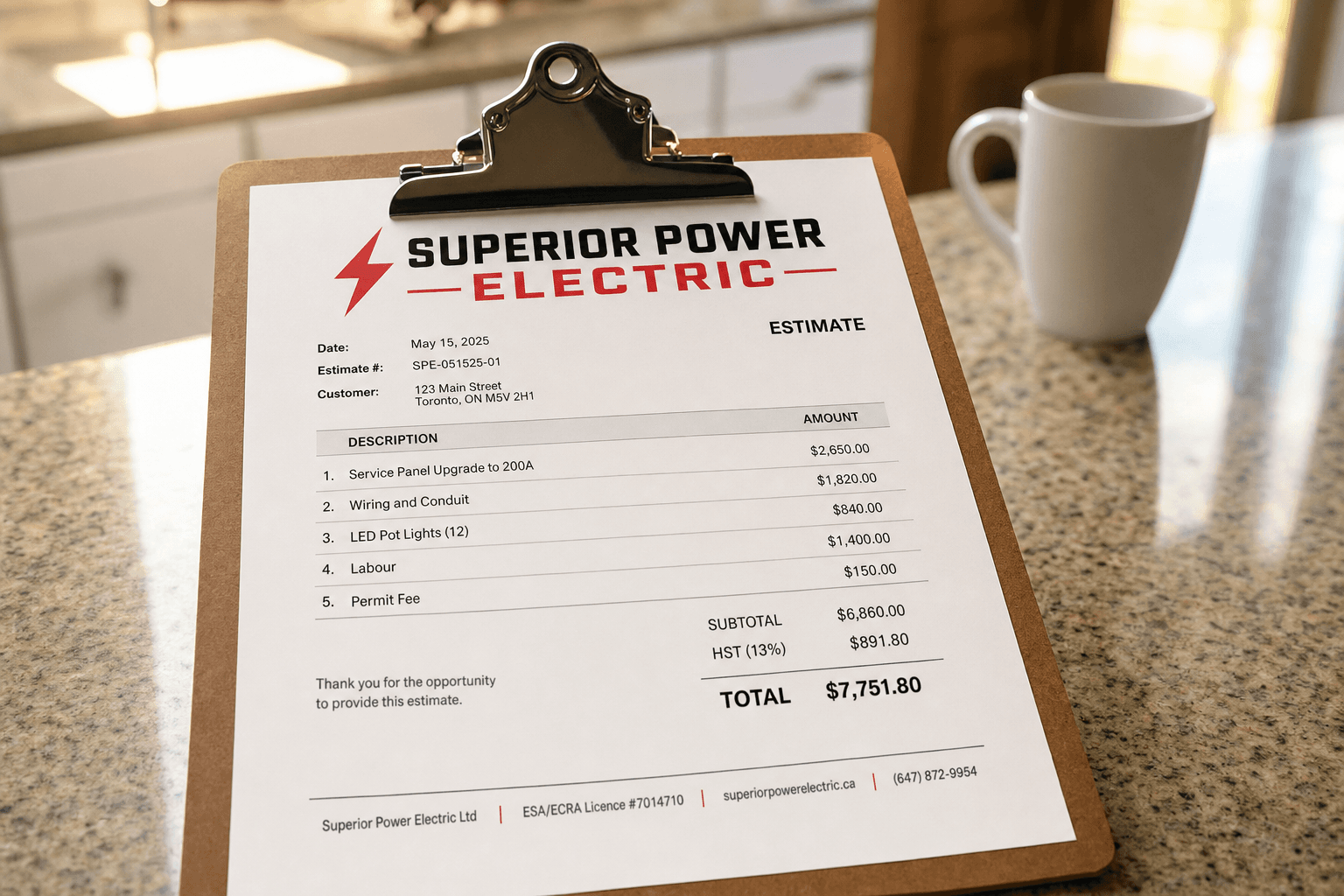
On cost, Superior Power Electric prices defined jobs flat rate, not by the hour, so you know the number before we start. For reference, our site lists a new dedicated outdoor outlet at $200 to $400 and a new dedicated circuit at $200 to $450 when added during a panel upgrade. A plain outlet extended from a nearby circuit is less than a dedicated circuit. The 2026 ESA fee for a licensed contractor is $46 for a small job of up to 10 devices.
Book the $49 assessment for a written quote, or send a photo of the spot and your panel for a free remote estimate.
Who this is for
Most outlet calls we get in Brampton and the GTA are one of these.
A home office or bedroom with one outlet and a power bar doing all the work.
A garage or workshop that needs outlets for tools and a freezer.
An outdoor outlet for lights, a pressure washer or a plug-in hot tub. Our hot tub wiring guide covers the plug-in case.
A kitchen counter that needs more outlets, or a basement room being finished. Finished basements usually mean several outlets and circuits at once; our basement wiring page covers that job.
If you are replacing a worn outlet in the same spot with no new wiring, that is a different, smaller job. ESA's guidance is still to use a Licensed Electrical Contractor and to file a notification for electrical work, so ask us and we will tell you what applies.
What the electrician actually does
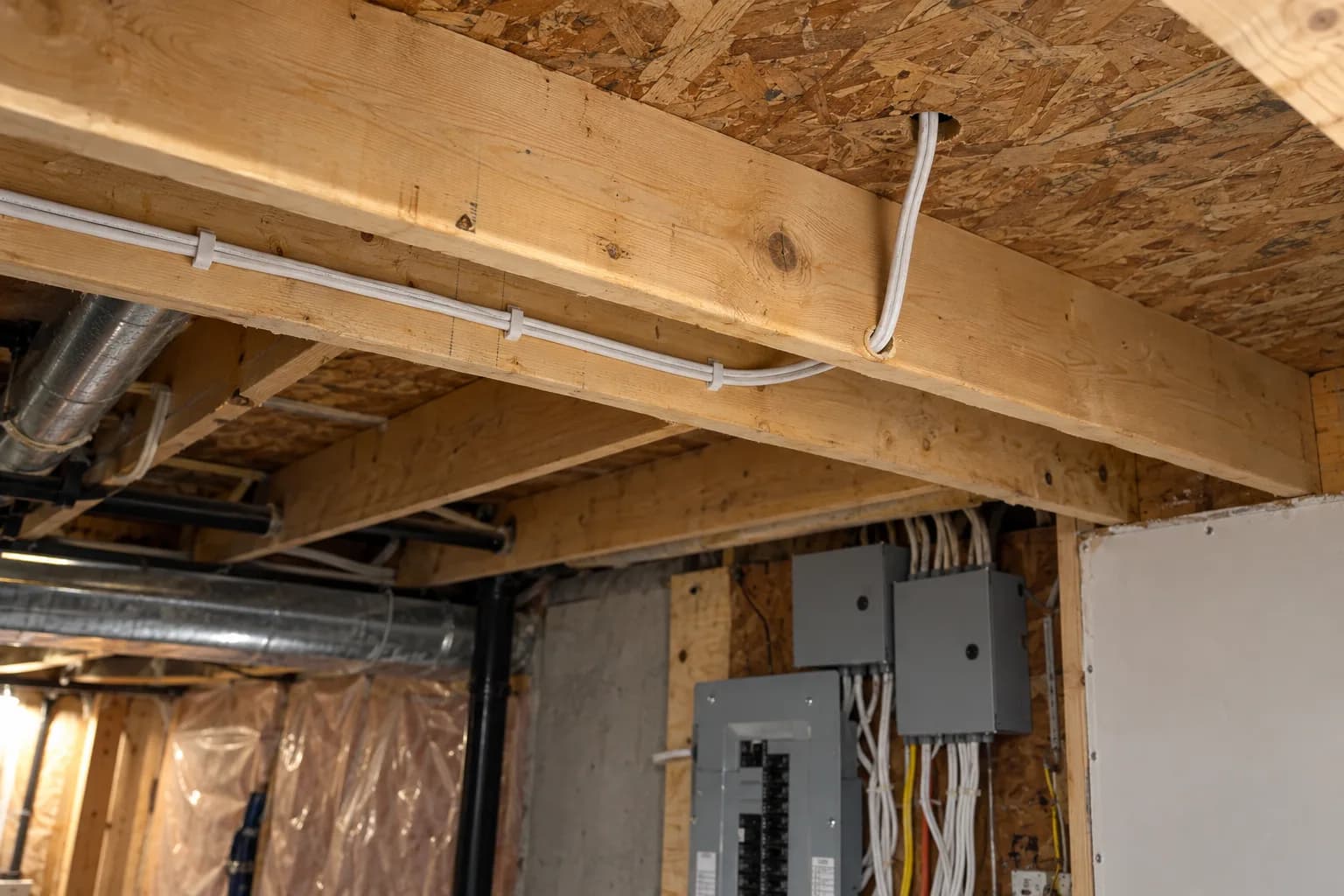
Step one is choosing the circuit. We look at the panel and find a nearby circuit with room on it, or decide the outlet needs its own circuit. A freezer, a space heater, a window air conditioner or a treadmill is usually better on a dedicated circuit. Our 240V and appliance circuits page covers the heavy loads.
Step two is the cable path. From an unfinished basement or an open attic we can usually reach the new spot without opening walls. In a finished room we fish cable inside the wall from the nearest box, and sometimes cut a small opening that gets patched afterward. This is the part that sets the time and the price.
Step three is the device. We cut in a new box, pull the cable, and install the right outlet for the location. Then we test it, including the GFCI test where one is used.
Step four is paperwork. We file the ESA notification before starting, request the inspection and give you the Certificate of Acceptance when it passes. ESA's notifications page explains why that record matters: it is a permanent record of the work on your home, and insurers ask for it.
Our 240V and appliance circuits page covers the heavy loads.
GFCI, dedicated circuits and outdoor outlets
A few rules decide what kind of outlet goes in.
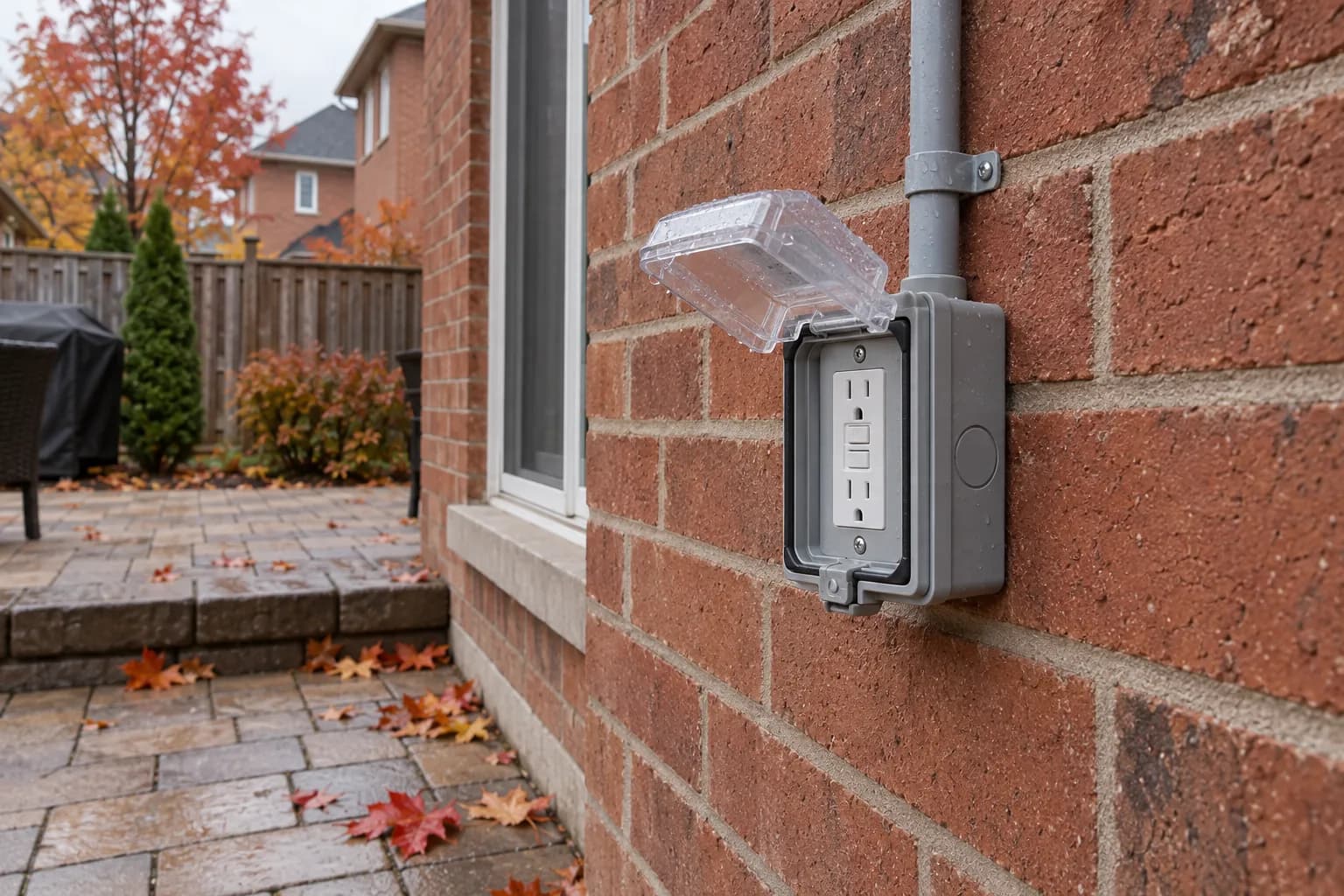
GFCI protection. A ground fault circuit interrupter cuts power in a fraction of a second if current leaks, which is what protects you from a shock near water. ESA's home safety advice is GFCI protection for circuits that supply outdoor appliances and tools, and in kitchens and bathrooms. The protection can be in the outlet itself or in the breaker.
Outdoor outlets. ESA says outdoor outlets must have covers that protect them from the weather. Running power outside is also one of the jobs our permit guide flags as always needing a permit.
Dedicated circuits. An outlet on its own breaker is for anything that pulls a lot of power or must not trip when something else does. Kitchen appliances, a freezer, a workshop and a home office with a lot of equipment are the usual cases. Each dedicated circuit is one more run of cable back to the panel.
Panel room. If the panel is full, a new circuit may need a tandem breaker, a sub-panel or a bigger panel. Our post on 100, 150 or 200 amp service explains when the panel itself is the limit.
What the permit costs in 2026
From ESA's 2026 Wiring Fee Guide, before HST. ESA counts outlets, switches and fixtures as devices.
Licensed contractor filing: $46 for 1 to 10 devices as a small job with a final inspection only, $92 for 11 to 30.
Homeowner filing for themselves: ESA's minimum fee for any notification is $92, so a small outlet job costs $92.
We file the notification and include the fee in the quote.
One more thing on DIY. ESA allows a homeowner to do electrical work in their own home with a notification, but friends, family and an unlicensed handyman may not do it for you. By law, anyone you hire for electrical work must be a Licensed Electrical Contractor. Our DIY electrical post goes through what that means in practice.
What it costs
We do not publish a single per-outlet price, because the cable path decides most of it. These are the outlet-related prices already on our site.
A new dedicated outdoor outlet runs $200 to $400, from our hot tub wiring guide.
A new dedicated circuit for kitchen appliances, a bathroom or a home office adds $200 to $450 each when done during a panel upgrade, from our panel upgrade cost guide.
For context, licensed electricians in Brampton charge $125 to $175 per hour in 2026, and a simple outlet replacement is under an hour of work, as our electrician rates post explains. We quote defined jobs flat rate, with the ESA fee included.
Adding several outlets at once is cheaper per outlet than one at a time, because the permit, the trip and the panel work are shared.
A new dedicated outdoor outlet runs $200 to $400, from our hot tub wiring guide.
How to book it
Send a photo of the spot where you want the outlet, the nearest existing outlet and your panel for a free remote estimate. For one or two outlets that is usually enough to quote.
Or book a $49 on-site assessment. A licensed electrician checks the panel, picks the circuit and the cable path, and gives you a written flat-rate quote with the ESA permit included. The $49 is credited to the job if you go ahead.
Book the $49 assessment or call (647) 872-9954. We add outlets and circuits across Brampton, Mississauga, Vaughan, Caledon and the GTA as part of our residential electrical work.
Common questions
Frequently asked
Do I need a permit to add an outlet in Ontario?
Yes. Adding an outlet or moving one is new wiring, and ESA requires a notification of work filed before the work starts. A licensed contractor files it for you. In 2026 the contractor fee for a small job of up to 10 devices is $46 before HST.
Can I add an outlet myself?
ESA allows a homeowner to do electrical work in their own home, but only with a notification filed with ESA and an inspection afterward. Friends, family or an unlicensed handyman may not do it for you. Anyone you hire must be a Licensed Electrical Contractor.
Does a new outlet need to be GFCI?
Outdoors, in kitchens and in bathrooms, yes, following ESA's guidance for places with water. The protection can be in the outlet or in the breaker. Indoors in a dry room, a standard outlet is usually fine. We pick the right device for the spot.
How long does it take to add an outlet?
One or two outlets from an existing circuit with open access take a few hours. An outlet on a new dedicated circuit, or cable fished through finished walls, takes longer. The ESA inspection is scheduled after the work.
Shaun Pennant
Master Electrician, ESA/ECRA #7014710
Licensed master electrician with 15+ years serving Brampton and the Greater Toronto Area. Founded Superior Power Electric in 2020.