EICR, the Ontario way
What is an EICR in Ontario, and do I actually need one?
EICR - Electrical Installation Condition Report - is a UK term, but the thing it describes exists here too. In Ontario it's called a General Electrical Inspection, carried out by a licensed electrical contractor and backed by the Electrical Safety Authority (ESA). A licensed electrician checks your panel, wiring, outlets, and grounding, then hands you a written report on what's safe and what isn't. Same idea, different name, same real paperwork behind it.
The $49 comes off your project. Free remote estimates from photos.
 ESA/ECRA #7014710
The 20-second version
If you read nothing else on this page, read these.
- EICR is the UK name; the Ontario equivalent is a General Electrical Inspection, certified through the ESA.
- Every inspection starts with a $49 on-site assessment - panel, sample of outlets, grounding, visible wiring - credited toward any repairs.
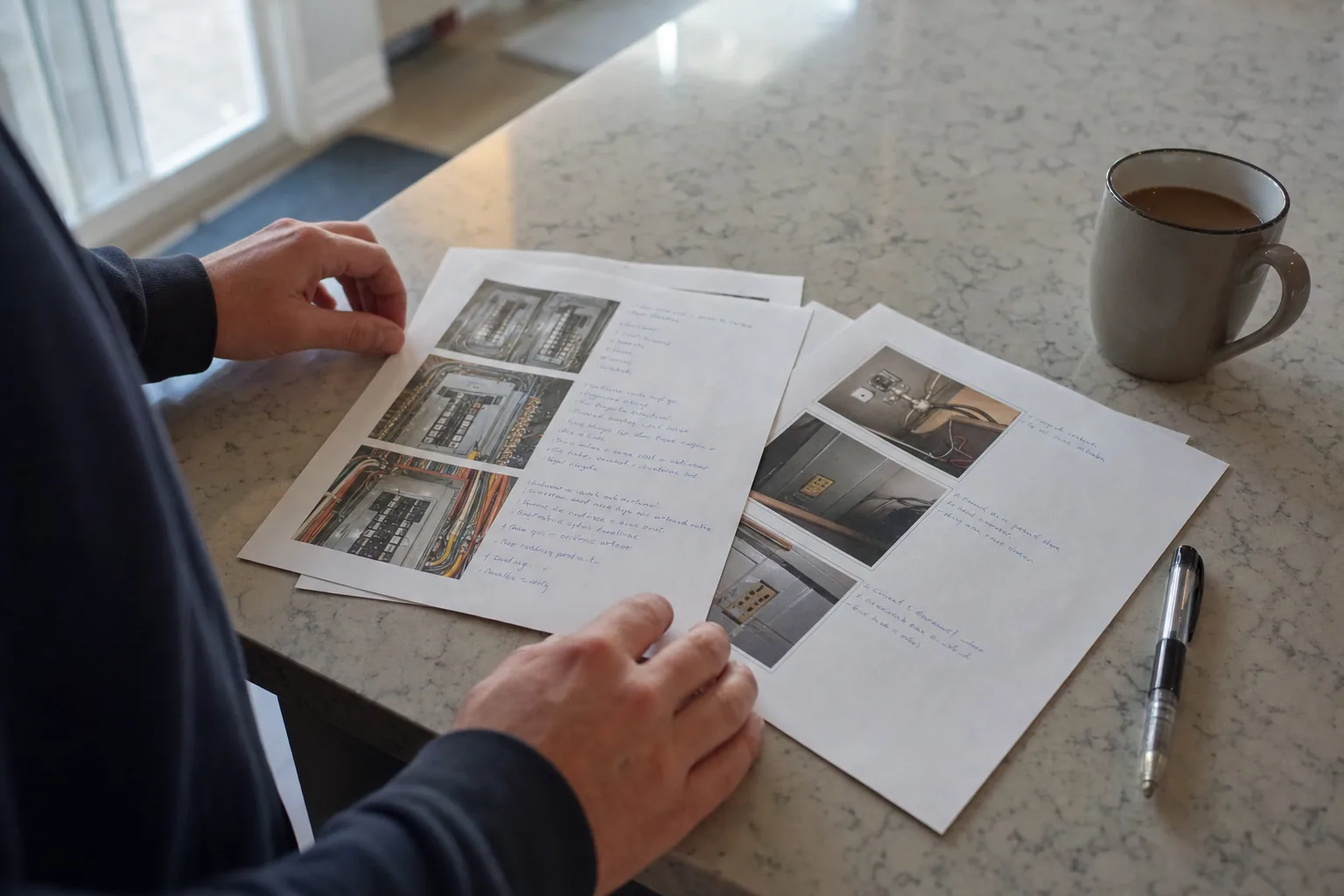
- You get a written report sorted into passed, needs attention, and urgent, with photos, in plain language.
- An ESA Certificate of Inspection is a separate, specific document tied to filed work - not the same as the condition report itself.
- Insurers, buyers, tenants, and home inspectors all accept the written report as documented proof of condition.
Every question, answered
Ask us anything. Here is all of it.
What it actually is
Why do Ontario homeowners search for 'EICR' if it's not an Ontario term?
Because plenty of Brampton homeowners, landlords, and newcomers came from places where EICR is the standard phrase for this exact inspection, or they've seen it used online. The report itself - condition of the panel, wiring, outlets, and grounding - is the same substance regardless of what it's called locally.
So what's the real Ontario name for this?
A General Electrical Inspection, done by an ESA/ECRA licensed contractor. Superior Power Electric is licensed under #7014710, which means the report and any certificate we issue actually carries weight with insurers and municipalities.
Is this the same as a home inspector's walkthrough?
No. A general home inspector's electrical check is a visual pass through the whole house alongside plumbing, roofing, and structure, useful for a broad picture but shallow on any one system. We're licensed electrical contractors, so our inspection goes deeper on the electrical system specifically, and only we can issue documentation ESA and insurers actually rely on.
What's the difference between the written report and an ESA certificate?
The written report documents condition: what we checked, what passed, what needs attention. An official ESA Certificate of Inspection is a separate document tied to electrical work that gets filed with ESA - it applies to repairs or upgrades we perform, not to a condition check on its own. If your situation needs the certificate specifically, tell us upfront and we'll confirm exactly what applies.
Who actually needs one
I'm just curious about my panel. Is this overkill?
Not at all - plenty of people book this purely for peace of mind on a home built before 1995. You don't need a sale, a tenant, or an insurance letter as a reason.
I'm a landlord. What am I actually being asked for?
Documented proof that a rental unit's wiring is safe for tenants. Insurers and municipalities are asking for this more often. A written report - and an ESA certificate where one applies - satisfies that and protects you as the owner if something is ever questioned later.
I'm selling. Will this help or hurt my sale?
It almost always helps. A clean report reassures buyers and takes electrical off the negotiating table. If we do find something, you get to fix it on your own timeline and at your own contractor's price, instead of a buyer's inspector finding it mid-negotiation and using it as leverage.
I'm buying. Should I book this before or after my home inspector's report?
After is usually best. If your general home inspector flags anything electrical - aluminum wiring, an old panel, missing grounding - book us to get a specific, licensed read on severity and cost before your conditions expire. They flag it; we're the ones licensed to fix and certify the fix.
My insurance company sent me a letter. What do I send back?
The written report we provide, documenting your panel, wiring, and grounding with photos. Most insurers accept a condition report from a licensed electrical contractor. If yours specifically insists on ESA paperwork, tell us and we'll confirm what ESA can provide for your situation before we book.
What we actually check
Walk me through what happens during the visit.
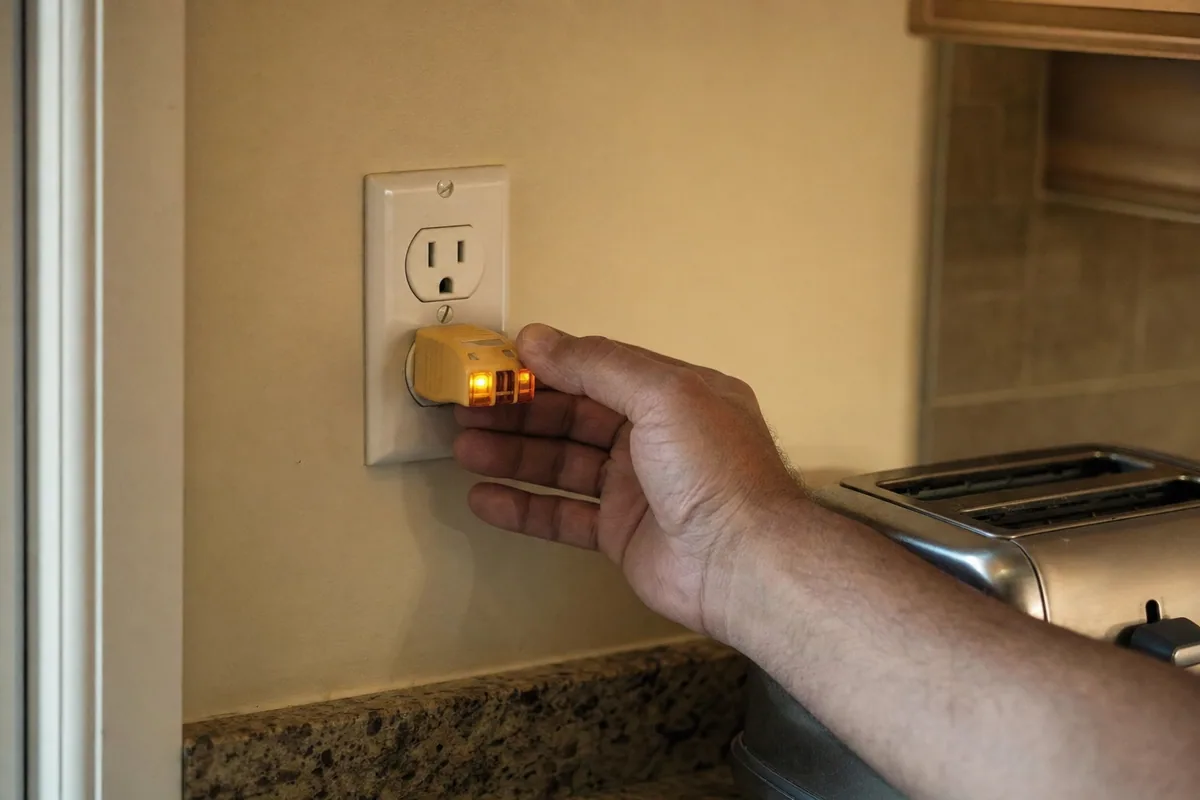
We check the panel for capacity, correct breakers, and signs of overheating or recalled equipment like Federal Pioneer Stab-Lok. We test a representative sample of outlets and switches for correct wiring, polarity, and GFCI/AFCI protection where required. We examine grounding and bonding, visible wiring runs, junction boxes, and connections for loose terminals or unsafe backstab joints, then assess the service entrance and meter base.
What specifically are you looking for that would fail an inspection?
Recalled panel hardware, active knob-and-tube or aluminum branch wiring, missing or failed GFCI/AFCI protection where code requires it, loose or backstabbed connections, undersized service for the home's actual load, and any visible damage or code violation in accessible wiring.
What is a Federal Pioneer Stab-Lok panel and why does it matter here?
Stab-Lok breakers have a documented history of failing to trip under overload conditions - the breaker's one job. That's why they're flagged in nearly every inspection and why many insurers won't renew a policy until one is replaced. If we find one, it goes in your report with a straightforward quote to replace it.
What happens if you find active knob-and-tube wiring?
We document exactly where it's active versus already disconnected, since many older homes have a mix of both, and give you options from targeted remediation to full replacement. Most Ontario insurers require active knob-and-tube addressed, so finding it during an inspection gives you time to plan instead of scrambling against a policy deadline.
Do you open every single outlet in the house?
No - we test a representative sample across the home's circuits, which is standard practice and enough to characterize the wiring type and condition. If the sample turns up a problem specific to one circuit, we widen the check on that circuit specifically.
Money and paperwork
What does this actually cost?
Every inspection starts with our $49 on-site assessment, which includes the inspection itself and the written report. That $49 is credited toward any repair work you choose to move forward with - it isn't a throwaway fee.
Is the $49 the whole thing, or are there add-ons?
The $49 covers the standard scope: panel, a sample of outlets and switches, grounding, and visible wiring. For a larger home or a wider scope, we quote any additional inspection time upfront, before we start.
What if the ESA certificate itself has a fee?
If your sale, rental, or insurer needs an official ESA Certificate of Inspection tied to work we perform, the ESA filing fee is quoted separately and up front. We never fold that into one lump number where you can't see it.
Do I have to book repairs through you after the inspection?
No. The report is yours to keep, show an insurer, or hand to a buyer or tenant regardless of what you decide to do next. If you do want the work done, we give you an itemized quote and the $49 comes off it.
Can I finance repairs if the report turns something up?
Yes, through Financeit, if the repair work adds up to something worth spreading out. We'll walk you through it when we hand you the quote.
Timing and access
How long does the inspection take?
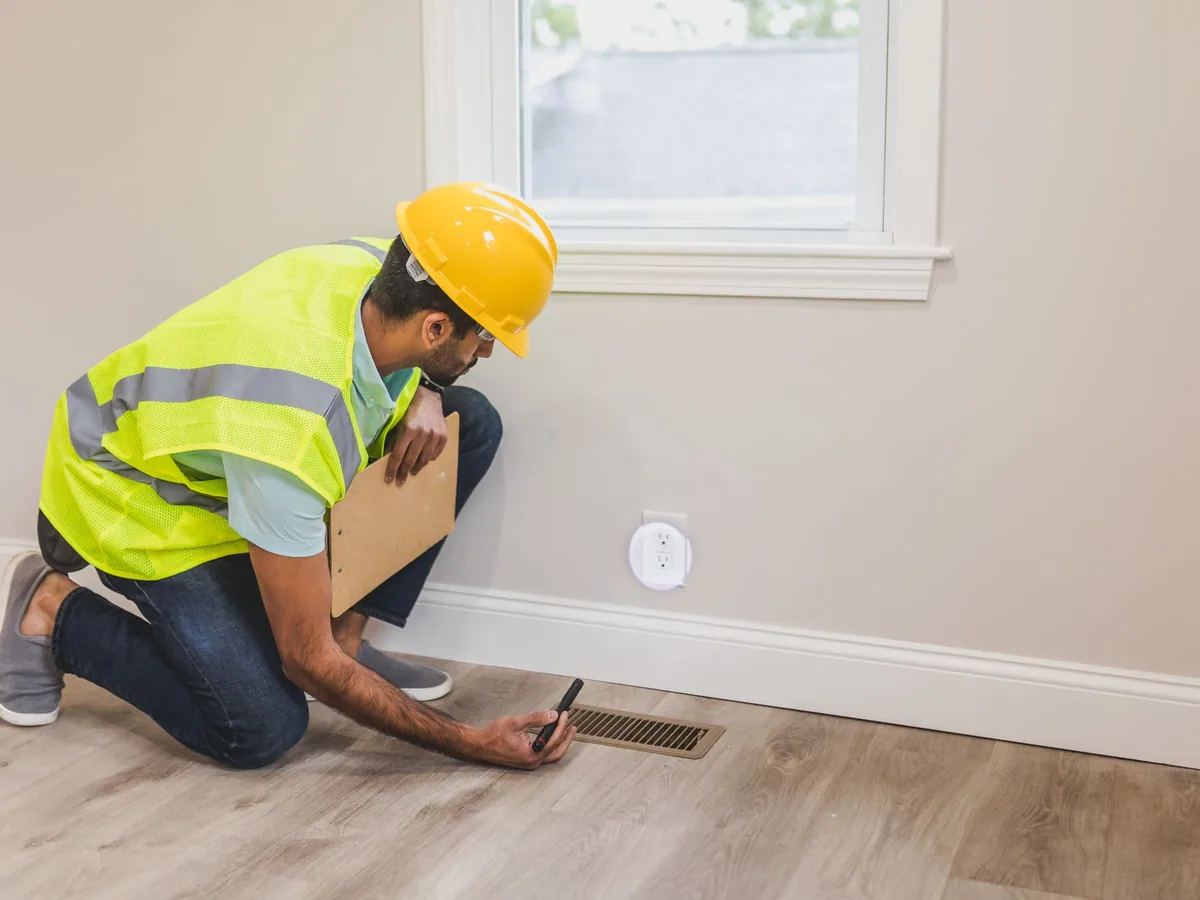
A standard single-family home typically takes one to two hours on-site, depending on size and how accessible the panel, attic, and crawlspace areas are. You get the written report and any repair quote before we leave, not days later.
Can you inspect a rental unit while a tenant lives there?
Yes. Under Ontario's Residential Tenancies Act, the landlord gives the tenant written notice at least 24 hours ahead, stating the reason and a time window between 8 a.m. and 8 p.m., unless the tenant consents to an earlier visit or it's an emergency. We only need brief access to the panel, a sample of outlets, and any visible wiring areas.
Do you inspect commercial or multi-unit buildings too?
Yes, across Brampton and the GTA, though pricing and scope differ from a single-family home given panel size and unit count. Call with the property details and we'll scope it properly before quoting.
My panel still uses fuses, not breakers. Does that get inspected too?
Yes, and it usually gets flagged. A fuse panel isn't automatically unsafe, but it's dated technology most insurers ask about directly, and it can't support the arc-fault and ground-fault protection required for a modern circuit. We document its condition and quote an upgrade if that's the direction you want.
What this actually looks like
From the jobsite, not a catalogue
Money, straight up
What it actually costs
The inspection itself is a flat $49, credited toward repairs. What varies is what the report finds and what fixing it costs - here's what those follow-on jobs typically run.
These are typical Ontario ranges for what an inspection commonly turns up, not a quote for your specific home. The $49 assessment gets you the exact scope in writing before anything else is decided.
| The job | Typical range | What moves the number |
|---|---|---|
| $49 on-site assessment and written report | $49 | Credited in full toward any repair work you proceed with |
| ESA Certificate of Inspection (where required) | Quoted separately | Tied to filed repair or upgrade work, not the condition check alone |
| Federal Pioneer Stab-Lok panel replacement | $2,800 - $5,000 | Depends on amperage upgrade and whether the meter base also needs replacing |
| Knob-and-tube remediation (partial to full) | Varies by scope | Depends on how much active knob-and-tube is found and whether walls need opening |
| Aluminum wiring remediation | $1,500 - $4,500 | Connector-based fix for a typical 3-bedroom house; see the aluminum wiring page for the full breakdown |
No mystery process
What happens when you call
Here's what actually happens, start to finish.
- 1
Book the $49 on-site assessment
A licensed electrician checks your panel, a sample of outlets and switches, grounding, and visible wiring. One to two hours for a standard home.
- 2
You get the written report
Sorted into what passed, what needs attention, and what's urgent, with photos on every flagged item, in plain language.
- 3
You get an itemized quote, if anything needs fixing
No obligation to book it with us. The report and the quote are yours either way.
- 4
You decide
Show the report to your insurer, buyer, or tenant, book the repairs, or file it away for peace of mind. Your call.
- 5
ESA involvement, if your situation needs it
If a sale, rental, or insurer specifically needs an ESA Certificate of Inspection tied to repair work, we handle the filing and quote the ESA fee separately, up front.
Things the internet got wrong
Myth vs. fact
“EICR isn't a real thing in Ontario, so nobody can actually do one.”
The name is British, but the substance - a licensed electrician's documented condition check of your panel, wiring, and grounding - exists here as a General Electrical Inspection, backed by the ESA.
“A home inspector's report during a house sale already covers this.”
A general home inspector's electrical check is a visual walkthrough alongside every other system in the house. It's useful for spotting red flags, but it isn't the same depth as a licensed electrical contractor's inspection, and only a licensed contractor's documentation is what insurers and ESA actually rely on.
“If nothing looks obviously wrong, there's nothing to find.”
Recalled panel hardware, backstabbed connections, and knob-and-tube mixed into later wiring often look completely normal from the outside. That's exactly why the inspection opens the panel and tests a sample of devices instead of eyeballing the house.
“The $49 assessment is a bait price that turns into a huge bill.”
The $49 covers the inspection and the written report, full stop. If nothing needs fixing, that's all you pay. If something does, you get an itemized quote before any repair work starts, and the $49 comes off it.
“Getting the ESA certificate is the same as getting the inspection.”
The certificate is tied to specific electrical work filed with ESA. The inspection and its written report is a broader condition check. You can have one without needing the other, depending on what your insurer, buyer, or municipality is actually asking for.
Walk away if...
- Calls it an 'EICR certificate' and can't explain the Ontario ESA equivalent
- Skips opening the panel or testing any outlets before handing you a report
- No written report, just a verbal 'looks fine'
- Can't explain the difference between the inspection report and an ESA certificate
- Pressures you into repairs on the spot instead of leaving you a written quote
A good electrician will...
- Explains the EICR-to-Ontario naming clearly instead of dodging the question
- Opens the panel and tests a real sample of outlets, not a walk-through
- Hands you a written report with photos, sorted by urgency
- Tells you plainly whether you need an ESA certificate or just the condition report
- No obligation to book repairs through them - the report is yours regardless
Around here specifically
Where this comes up most around Brampton and Mississauga
Homes built before 1995 across Brampton, Mississauga, and Caledon are where we find the most to flag - Federal Pioneer Stab-Lok panels, aluminum branch wiring from the 1965-1976 window, pockets of active knob-and-tube in older Streetsville and Malton homes, and backstabbed outlets in 1980s-2000s builder-grade wiring. If your home falls into any of those windows and an insurer, buyer, or tenant situation has you thinking about it, the $49 assessment turns a guess into a written answer. We're based in Brampton and cover the wider GTA.
Still have a question we missed?
Call and ask it. A licensed electrician answers, and honest advice is free even when the job isn't ours.