The short answer
In Ontario, Superior Power Electric's published ranges are:
Partial rewiring (a few circuits, or the kitchen and bathrooms): $3,000 to $8,000.
Full home rewire: $8,000 to $20,000. A bungalow with an open basement sits at the low end. A large two-storey with finished walls and a tight attic sits at the top.
For knob and tube homes specifically, our knob and tube guide lists a full bungalow rewire at $5,000 to $8,000 and a two-storey at $8,000 to $15,000.
For aluminum wiring, you may not need a rewire at all. Repairing every connection with approved connectors in a typical three-bedroom home runs $800 to $2,500. More on that below.
Every one of these prices includes the new copper wiring, the ESA permit and inspection, and the ESA certificate your insurer asks for. Drywall patching is usually quoted separately.
Who this is for
Most rewiring calls we get in Brampton, Caledon and the east end of the GTA start with one of three letters.
An insurer says the home has knob and tube or aluminum wiring and gives a deadline to fix it. ESA's knob and tube page confirms that many insurers will not provide or renew coverage on homes with this wiring, and some require replacement first.
A home inspector flags old wiring during a purchase, and the lender wants proof the home can be insured before closing. Our guide to an electrical inspection before buying a house covers that situation.
Or the home is being renovated and the walls are open anyway, which is the least expensive time to rewire.
If none of those apply and the wiring is copper, tripping breakers or too few outlets usually call for new circuits or a panel upgrade, not a rewire. Our post on 100, 150 or 200 amp service explains that decision.
What the quote covers
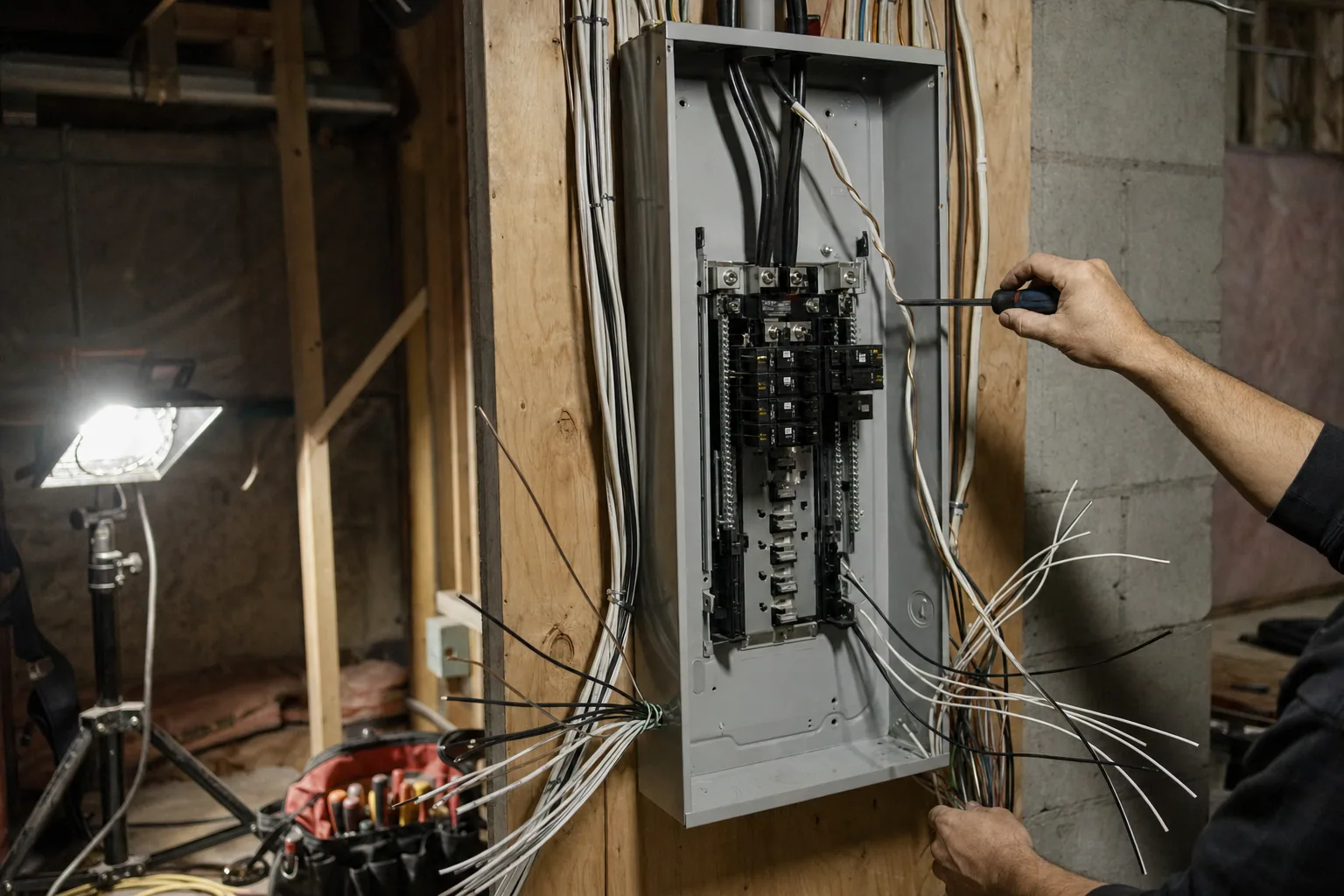
A rewire replaces the branch circuits: the wiring that runs from the panel to every outlet, switch and light. The new cable is NMD90 copper, the standard grounded cable used in Ontario homes today.
Our quotes include the cable and devices, the labour, the ESA notification of work (what most people call the permit), the ESA inspection and the Certificate of Acceptance. ESA says the Ontario Electrical Safety Code requires almost all electrical work be reported with a notification filed before the work starts, and that your Licensed Electrical Contractor files it. If a quote does not mention the permit, ask.
Two things are often not in the electrical quote. Drywall and plaster patching is usually a separate trade. We keep openings small and coordinate with a drywall contractor when needed. And a panel upgrade is a separate line if the old panel is undersized or is a fuse box. Our 2026 panel upgrade cost guide gives those numbers.
The new cable is NMD90 copper, the standard grounded cable used in Ontario homes today.
What moves the price
Five things explain most of the spread between $8,000 and $20,000.
Size and layout. More rooms means more circuits and more cable. A two-storey needs cable fished through floors as well as walls.
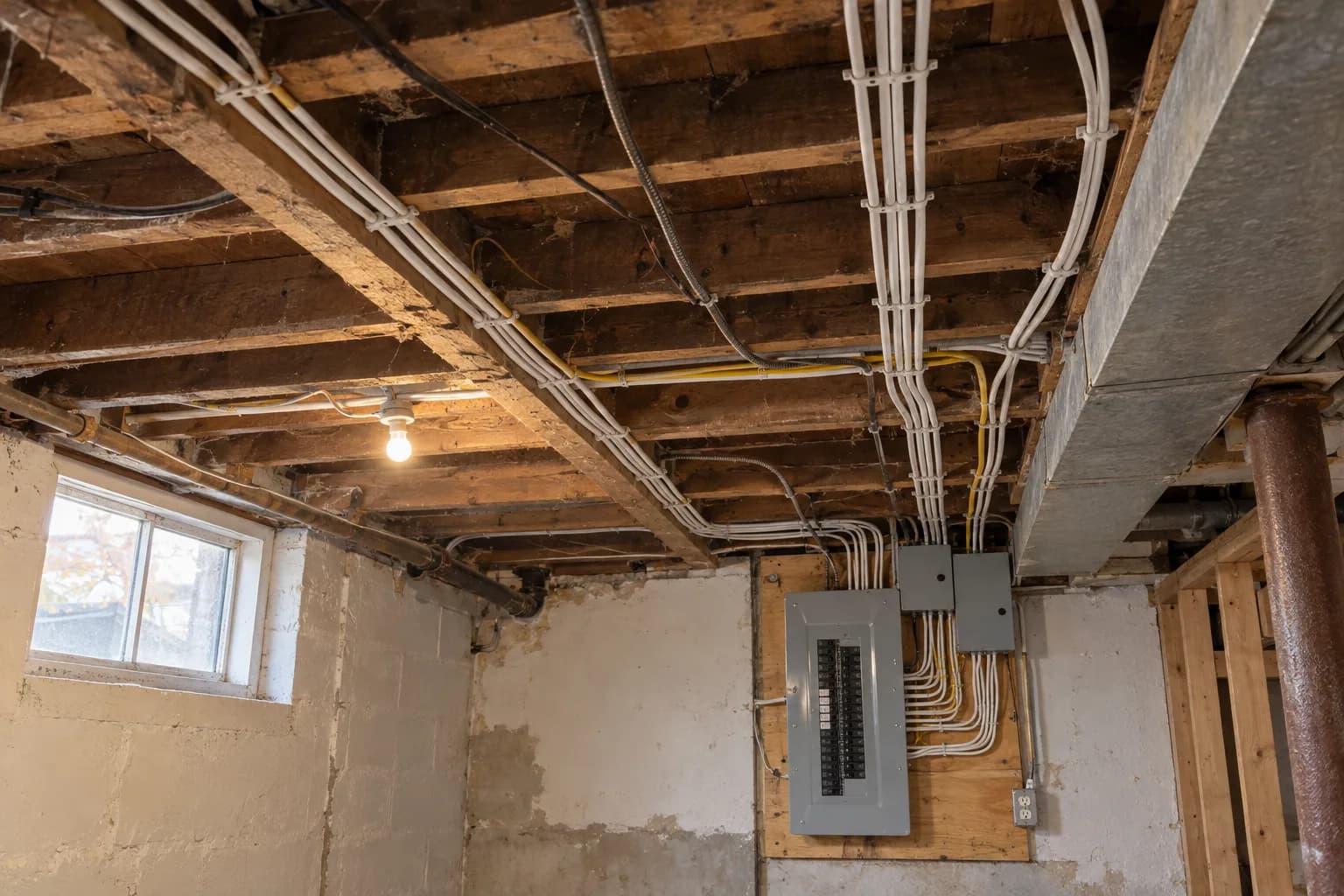
Access. An unfinished basement and an open attic let us run most cable without opening walls. Finished basements, cathedral ceilings and plaster walls mean more openings and more labour.
How much is being replaced. Replacing only the active knob and tube or only the kitchen and bathroom circuits is partial rewiring. Replacing everything is a full rewire.
The panel. If the old panel cannot take the new circuits, it is replaced at the same time.
What we find. Old homes often have splices in the wrong places, circuits added without a permit, or insulation packed around knob and tube. Each one adds work. The assessment is where we find most of it, so the written quote holds.
Knob and tube: what to expect
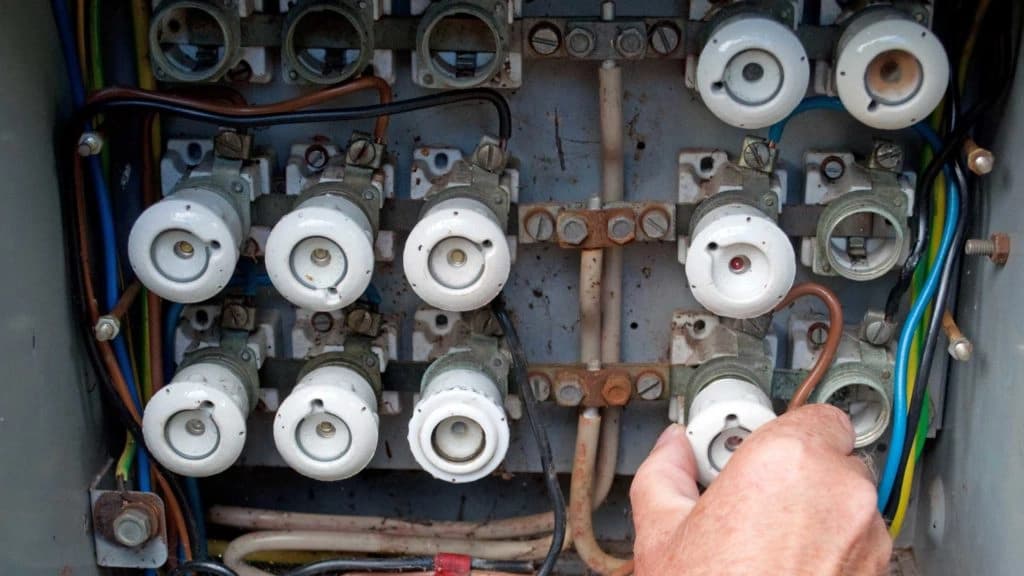
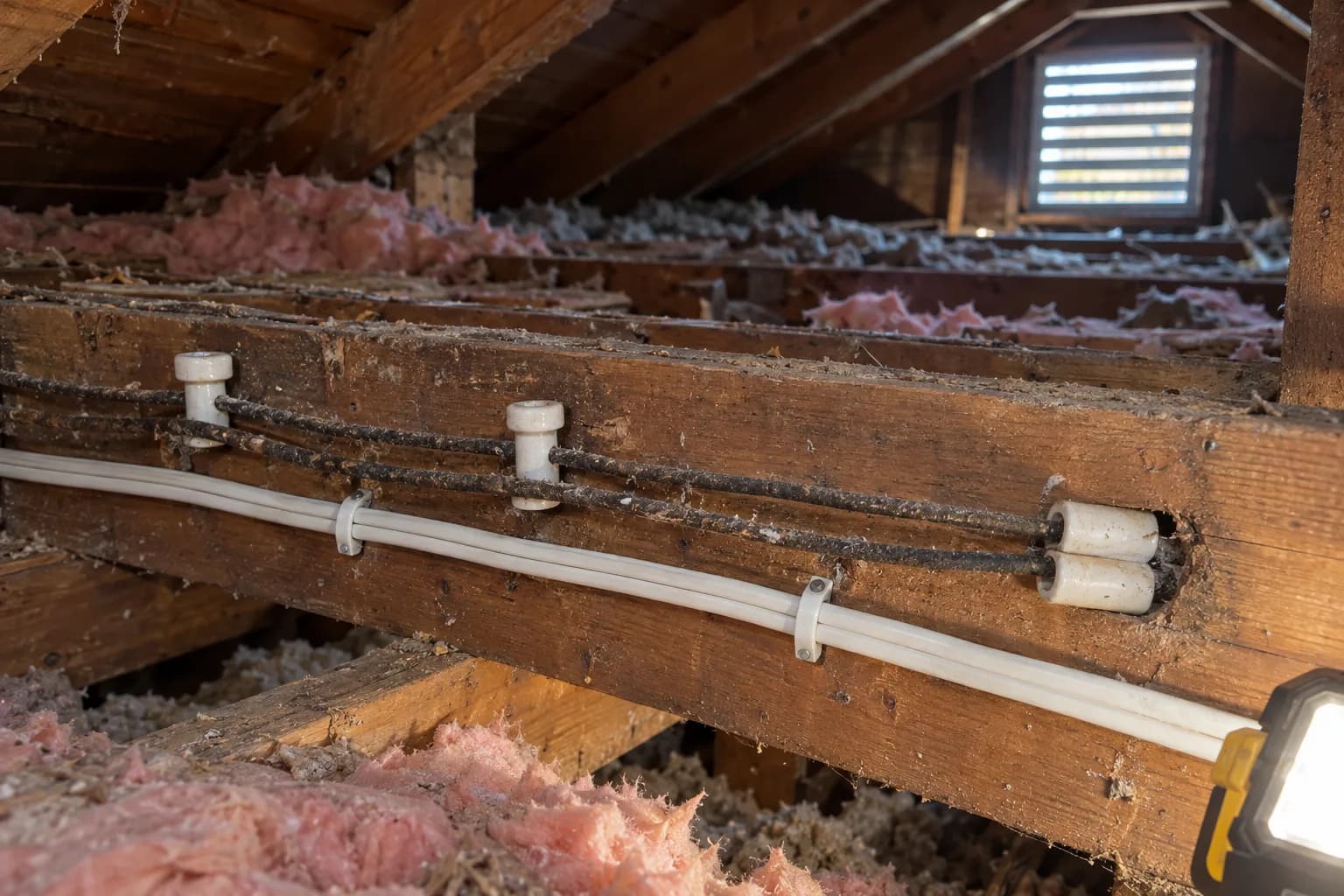
Knob and tube was used from the early 1900s to the 1940s, so it shows up in Brampton's older streets, parts of Toronto, Scarborough and Etobicoke, and older Caledon farmhouses. ESA says it is safe when properly maintained by a Licensed Electrical Contractor, that the current Code no longer includes rules for installing it, and that the Code is not retroactive. In other words, nobody is forced to remove it by law. Insurers are the ones forcing the issue.
Our published knob and tube ranges: partial replacement of a few circuits $3,000 to $6,000, a full bungalow $5,000 to $8,000, a full two-storey $8,000 to $15,000. These include the new copper, grounding, permit, inspection and certificate.
One example from our rewiring page: a 1952 bungalow in Brampton's Peel Village had active knob and tube throughout and an insurer giving 90 days. The full rewire took five days and the ESA certificate satisfied the insurer. Our knob and tube service page has the full process.
Aluminum wiring: you may not need a rewire
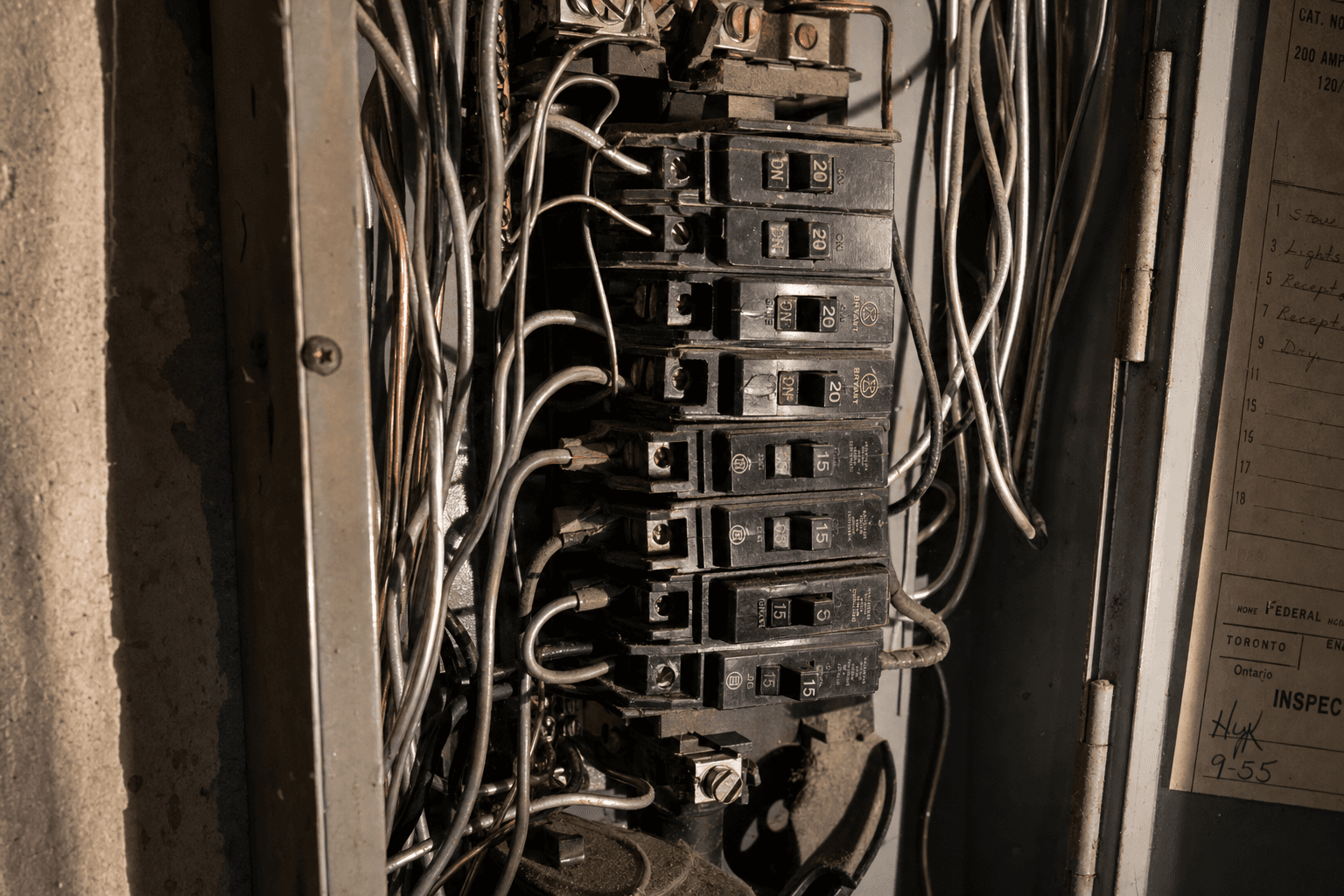
Aluminum branch wiring was common in homes built from 1965 to the late 1970s. The problem is at the connections, not the wire itself. ESA's aluminum wiring page says aluminum wiring is safe when the connections are made properly with approved devices, and recommends an assessment by a contractor who knows the repair methods.
That is why the honest first option is usually pigtailing: a short copper lead joined to the aluminum at every outlet, switch and fixture with an approved connector. Our aluminum wiring guide lists that at $800 to $2,500 for a typical three-bedroom home, with partial rewiring of the kitchen and bathrooms at $1,500 to $4,000 and a full copper rewire at $8,000 to $20,000.
Most insurers accept pigtailing with an ESA certificate. Ask yours before you pay for a full rewire. A contractor who quotes a full rewire without checking whether connector repair would satisfy your insurer is costing you money. Our aluminum wiring service page explains both options.
Aluminum branch wiring was common in homes built from 1965 to the late 1970s.
How long it takes and what living through it is like
A full home rewire typically takes three to seven days depending on size and access. Partial rewiring or pigtailing is usually one or two days.
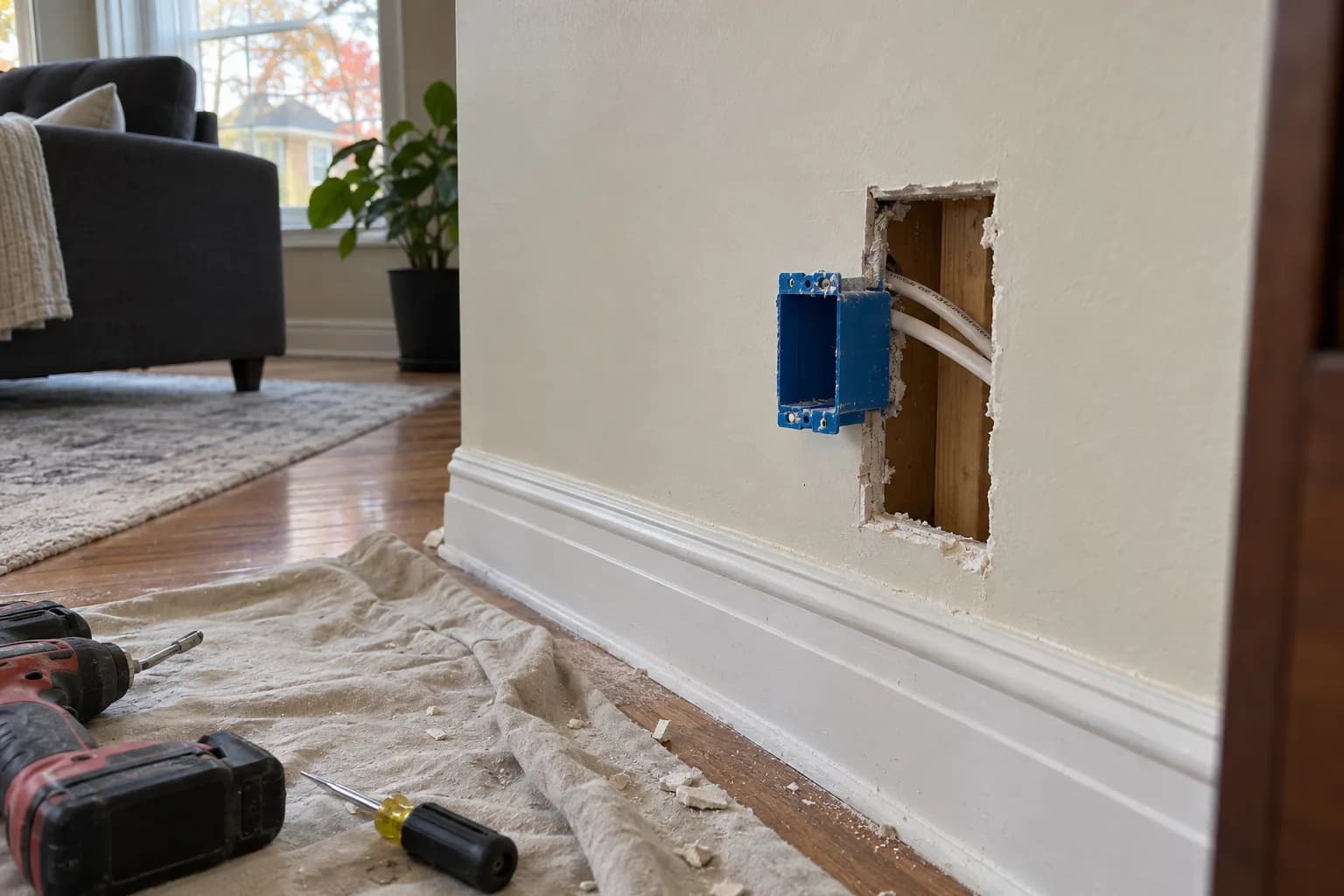
Power is off circuit by circuit, not for the whole job. You can usually stay in the house. Expect some dust, small wall openings and a day of patching afterward.
The ESA inspection happens in stages: a rough-in inspection before walls close, then a final. The certificate comes after the final. Your insurer will want a copy, so keep it.
How to get a real number for your house
No range on a website replaces a look at your panel and walls. At a $49 on-site assessment, a licensed electrician traces which circuits are old wiring, checks the panel, looks at access through the basement and attic, and writes a scope and quote. The $49 is credited to the job if you go ahead.
Bring the insurer's letter if you have one. It tells us exactly what they will accept, which is often less than a full rewire.
Book the $49 assessment or call (647) 872-9954. We serve Brampton, Caledon, Mississauga, Vaughan and across the GTA.
Common questions
Frequently asked
Does rewiring a house in Ontario need a permit?
Yes. ESA requires a notification of work, filed before the work starts, and an inspection. Superior Power Electric files it and includes the fee and the ESA certificate in every rewiring quote.
Can I rewire part of the house and leave the rest?
Often, yes. Partial rewiring of the active knob and tube circuits or the kitchen and bathrooms runs $3,000 to $8,000. Whether your insurer accepts a partial job depends on their letter, so check with them first.
Does aluminum wiring mean a full rewire?
Usually not. Repairing every connection with approved connectors runs $800 to $2,500 for a typical three-bedroom home and is accepted by most insurers with an ESA certificate. A full rewire is for wiring in poor condition, major renovations, or an insurer that specifically demands it.
Does the price include drywall repair?
Usually not. The electrical quote covers the wiring, devices, permit, inspection and certificate. Drywall or plaster patching is a separate trade. We keep openings small and can coordinate the patching.
Shaun Pennant
Master Electrician, ESA/ECRA #7014710
Licensed master electrician with 15+ years serving Brampton and the Greater Toronto Area. Founded Superior Power Electric in 2020.