The short answer
Look at where the flicker shows up.
One bulb flickers: it is almost always the bulb, the socket or the dimmer. Try a new bulb first.
Lights in one room or on one circuit flicker: that points to a loose connection at a switch, outlet, light box or in the panel. The Electrical Safety Authority (ESA) says dim, surging or flickering lights can be a sign of a loose connection in a lighting circuit, a fixture or your electrical service, and that it can become a shock or fire hazard. ESA's advice is to contact a Licensed Electrical Contractor.
The whole house dims when a big appliance starts: your panel or service may be at its limit, or a main connection is loose. Occasional slight dimming is normal. Frequent or heavy dimming is not.
The whole street flickers: that is the utility, not your house.
If flicker comes with a burning smell, buzzing, warm switches or outlets, or a breaker that keeps tripping, stop reading and call an electrician today.
One bulb flickers
Start with the cheap fixes. Turn the light off, let the bulb cool, and tighten it. If it still flickers, swap in a new bulb.
If the light is on a dimmer, check the match. Not every LED bulb works with every dimmer. An older dimmer built for incandescent bulbs can make an LED flicker or buzz even though both parts are fine on their own. The bulb box usually says which dimmers it works with. Replacing the dimmer with one rated for LEDs is a small job for an electrician.
A bulb that flickers in one fixture but works fine in another fixture means the problem is the fixture or its wiring, not the bulb. That moves it into the next group.
Lights in one room or on one circuit flicker
When several lights on the same switch or in the same room flicker together, the cause is usually a loose or worn connection somewhere on that circuit. It can be inside a switch, behind an outlet, in a ceiling box or at the breaker.
A loose connection is not a cosmetic problem. Current jumping a small gap makes heat. ESA's Homeowner Electrical Safety Handbook lists flickering lights as a hazard sign because of that heat. It is also why we treat a warm switch plate or a faint burning smell as urgent.
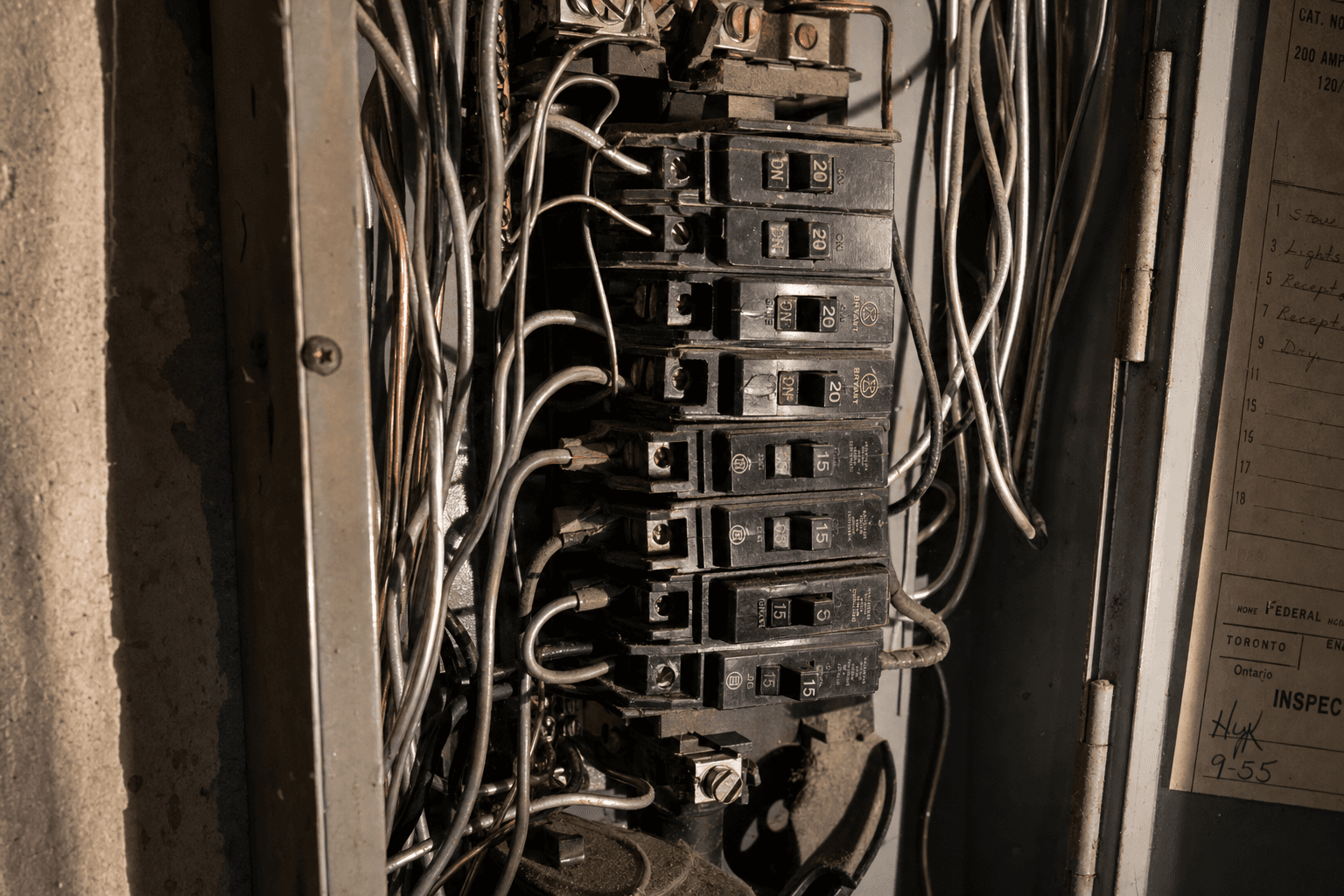
In Brampton and across Peel, one cause comes up over and over in homes built between 1965 and 1978: aluminum wiring. Aluminum expands and contracts more than copper, so connections at switches and outlets loosen over time. Flickering lights, warm outlets and breakers that trip for no clear reason are the classic signs. ESA's aluminum wiring page says aluminum wiring is safe when the connections are made properly with approved devices, and recommends having a Licensed Electrical Contractor assess it. Our aluminum wiring guide explains how to spot it and what the fixes cost.
If the circuit is copper and the home is newer, the usual suspects are a back-stabbed outlet (the wire pushed into a spring clip instead of screwed down), a worn switch, or a connection that was never tightened. Each of these is a straightforward repair once it is found. Finding it is the work.
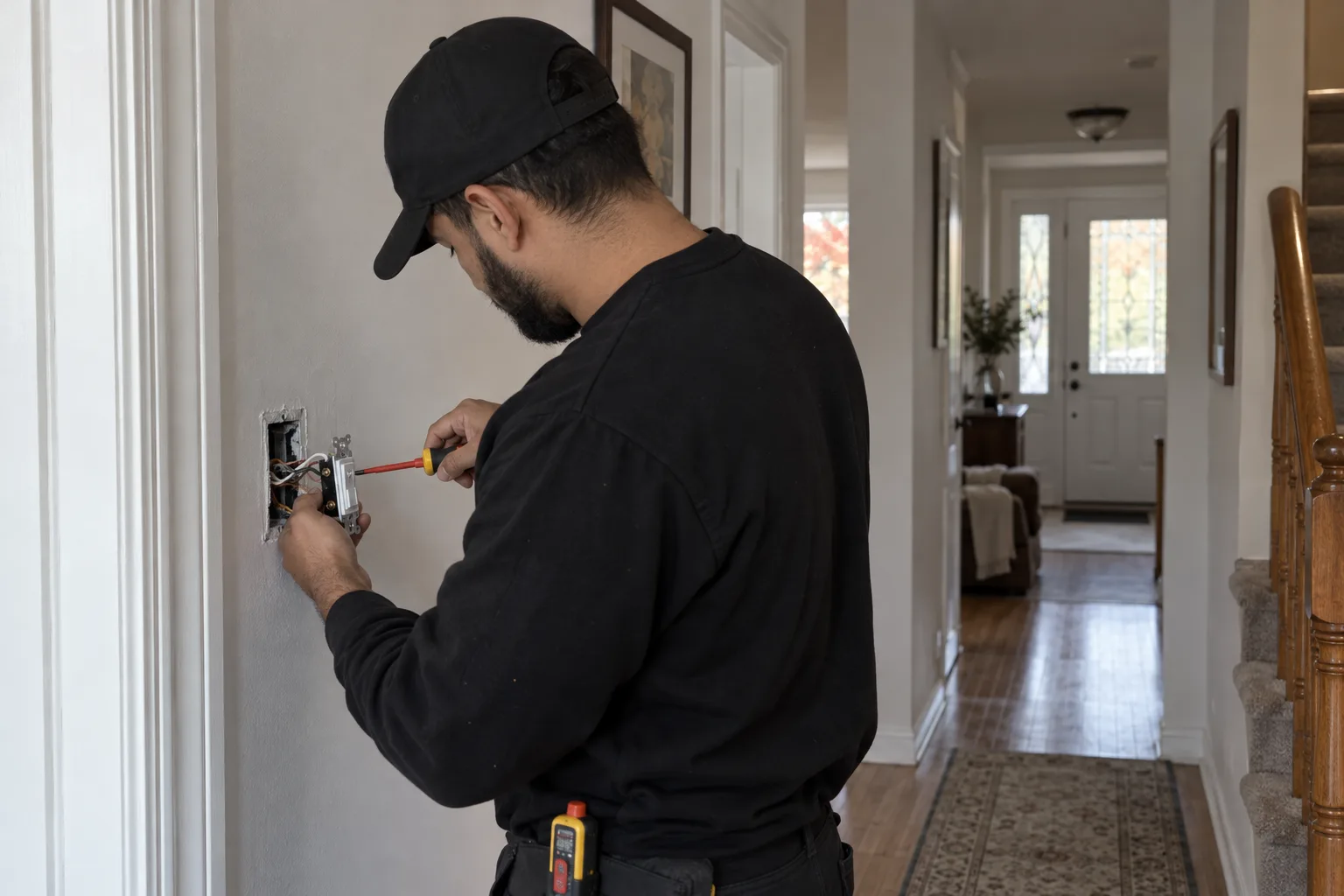
In Brampton and across Peel, one cause comes up over and over in homes built between 1965 and 1978: aluminum wiring.
The whole house dims when an appliance starts
If the lights dip for a second when the furnace, dryer, air conditioner or microwave starts, that is the appliance pulling a burst of current on startup. A slight, brief dip is normal.
If the dip is heavy, happens often, or you see it in several rooms, your home may be asking for more than its panel or service can give. Our guide on when to replace an electrical panel covers this as one of the seven warning signs. Older Brampton homes on 100 amp service that have added an EV charger, a hot tub or a finished basement often land here. Our post on 100, 150 or 200 amp service explains how to tell what size your home needs.
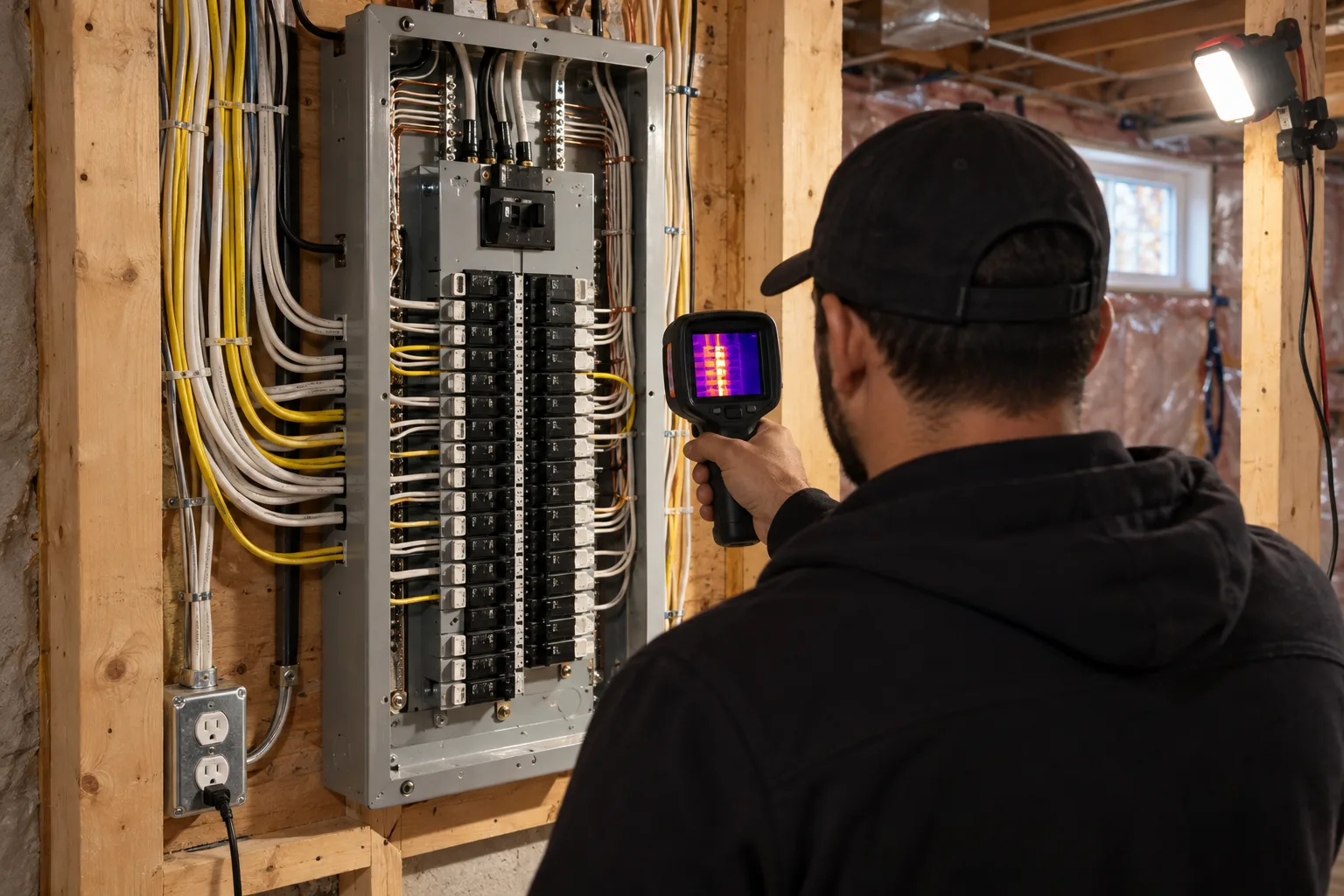
The other whole-house cause is a loose connection at the main: where the service cable lands in the panel or the meter base. ESA's handbook names a loose connection in your electrical service as one cause of flicker. This one is not a homeowner check. The main lugs stay live even with the main breaker off.
The whole street flickers
If your neighbours see it too, or your lights flicker during a storm, the cause is upstream of your house. Utilities call this voltage flicker. Hydro One's power quality definitions describe it as sudden or repeated changes in voltage that show up as changes in light brightness, caused by things like large loads switching and adjustments on the supply system.
In Brampton, Mississauga and Vaughan the utility is Alectra. You can report flicker, dimming or any unsafe electrical condition on Alectra's report page or by calling 1-833-253-2872, which is staffed 24 hours a day.
An electrician cannot fix a utility problem, but we can confirm it is not your house. If the flicker is at your meter and your neighbours are fine, the problem is yours.
Signs that mean call now
Flicker on its own is a symptom to investigate. Flicker with any of these is an emergency:
A burning or fishy plastic smell near a switch, outlet or the panel.
Buzzing, humming or crackling from a wall, switch or the panel.
A switch plate, outlet or breaker that feels warm.
A breaker that trips again as soon as you reset it.
Scorch marks or discolouration on a cover plate.
If you smell burning, switch off that breaker if you can do it safely and leave it off. If the smell is from the panel itself, or you see smoke, get everyone out and call 911 first. Then call an emergency electrician. Our post on when to call an emergency electrician walks through what to do while you wait.
If the smell is from the panel itself, or you see smoke, get everyone out and call 911 first.
What we check and what the fix costs
At a $49 on-site assessment, a licensed electrician traces the flicker to its source. We check the fixture and bulb, open the switches and outlets on that circuit, look at the breaker and the connections in the panel, and check the main connections and meter base. If the home is from the aluminum years we confirm which circuits are aluminum. You get a written finding and a quote. The $49 is credited to the repair if you go ahead.
The fix depends on the cause. Tightening or replacing a single device is a small repair. Repairing aluminum connections in a typical three-bedroom home runs $800 to $2,500 with approved connectors, as published in our aluminum wiring guide. A panel that is out of capacity is a bigger job: a 100 to 200 amp upgrade in Ontario runs $2,800 to $5,000 including the ESA permit and inspection, per our panel upgrade cost guide.
Any repair that touches wiring is reported to ESA with a notification of work, which ESA says the Code requires for almost all electrical work. We file it and include the fee in the quote.
If the lights are flickering in your Brampton or GTA home, book the $49 assessment or call (647) 872-9954. If there is heat, a smell or buzzing, call now.
Common questions
Frequently asked
Are flickering lights dangerous?
Sometimes. One bulb flickering is usually just the bulb or dimmer. Several lights flickering together often means a loose connection, which makes heat and can become a fire hazard. ESA lists flickering lights as a hazard sign and advises calling a Licensed Electrical Contractor. Flicker with a burning smell, buzzing or warm outlets is an emergency.
Why do my LED lights flicker on a dimmer?
The bulb and the dimmer may not be matched. An older dimmer made for incandescent bulbs can make an LED flicker or buzz. Check the bulb box for the dimmers it is rated for, or have the dimmer replaced with one made for LEDs.
Why do my lights dim when the furnace or dryer turns on?
Big appliances pull a burst of current when they start, so a brief slight dip is normal. If the dip is heavy, frequent or shows up in several rooms, your panel or service may be at its limit, or a main connection is loose. A load check at an assessment tells you which.
Who do I call if the whole street is flickering?
Your utility. In Brampton, Mississauga and Vaughan that is Alectra, at 1-833-253-2872 or on its online report form, 24 hours a day. An electrician can confirm the problem is not inside your house.
Shaun Pennant
Master Electrician, ESA/ECRA #7014710
Licensed master electrician with 15+ years serving Brampton and the Greater Toronto Area. Founded Superior Power Electric in 2020.